One of the most expensive costs in a steel structure project is often not the steel itself, but the days spent waiting on site.
A beam that does not align with its bolt holes can leave a crane waiting. A connection node that is 20 mm out of position can bring the erection of an entire bay to a halt. These issues may take only a day to resolve in the workshop. On site, however, they may require scaffolding, hot-work permits, and additional inspections by the supervising engineer.
Factory trial assembly is not just about supplying steel components. It is about resolving potential delays before the components reach the construction site.
Waiting Is One of the Most Expensive Activities on Site
One Misaligned Connection Can Stop the Entire Erection Sequence
Steel structure erection is a sequential operation: columns, beams, secondary members, and cladding systems must be installed in the correct order. If one connection cannot be assembled, subsequent activities may have to stop.
Options for correcting problems on site are limited. They may include enlarging bolt holes with magnetic drills, trimming edges with cutting equipment, adding shim plates, or carrying out corrective welding. Each method can create additional issues. Hole enlargement may affect protective coatings or connection performance; thermal cutting may alter the member profile; and corrective welding may require additional inspection, including non-destructive testing where specified.
Three Costs: Labor, Equipment Rental, and Schedule Delays
Labor costs. Workshops are equipped with overhead cranes, assembly jigs, magnetic drills, and fixed work platforms. On site, workers may need scaffolding or aerial work platforms. Restricted working space and less efficient working conditions can increase labor requirements.
Equipment rental costs. Cranes are often charged by the shift or rental period, and waiting time may still be billable. When assembly problems delay lifting operations, the downtime translates directly into additional rental costs.
Schedule costs. Rework at a single location can typically affect the schedule by 1–3 days, depending on the issue and site conditions. When problems occur at multiple connection points, delays can accumulate and push the project back by several weeks.
Combined, these three costs can exceed the additional cost of conducting trial assembly in the factory.
What Exactly Is Checked During Trial Assembly?
Connection Nodes and Bolt Holes: First-Time Bolt Insertion
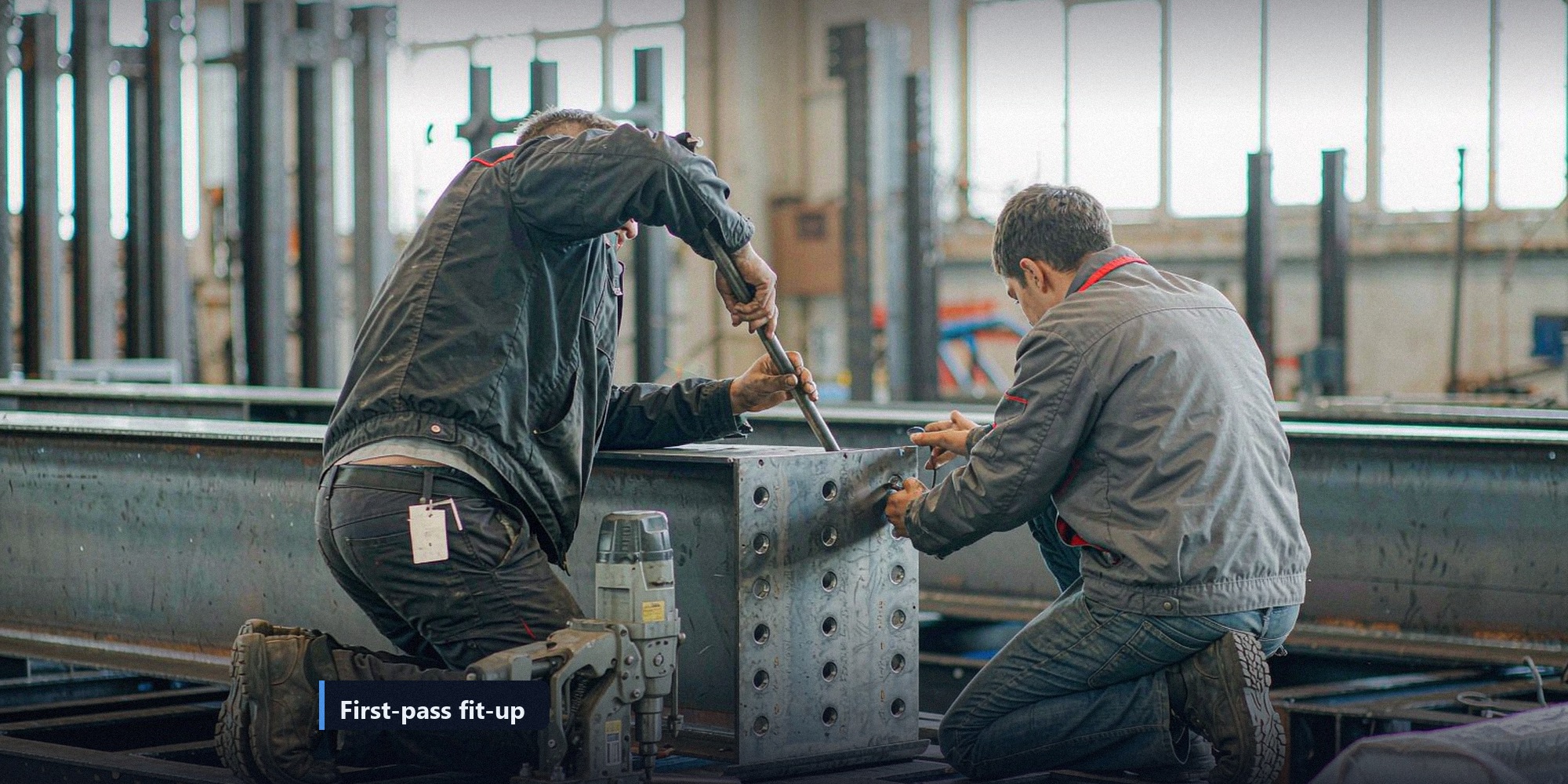
One of the most direct benefits of trial assembly is verifying whether bolts can be inserted through the intended holes without corrective work.
Multiple members meet at spatial connection points, and each member has its own fabrication tolerances. Individual components may pass dimensional inspections but still fail to fit together correctly because of accumulated tolerances.
Trial assembly reveals these cumulative deviations in the workshop, where adjustments can be made using appropriate fabrication equipment.
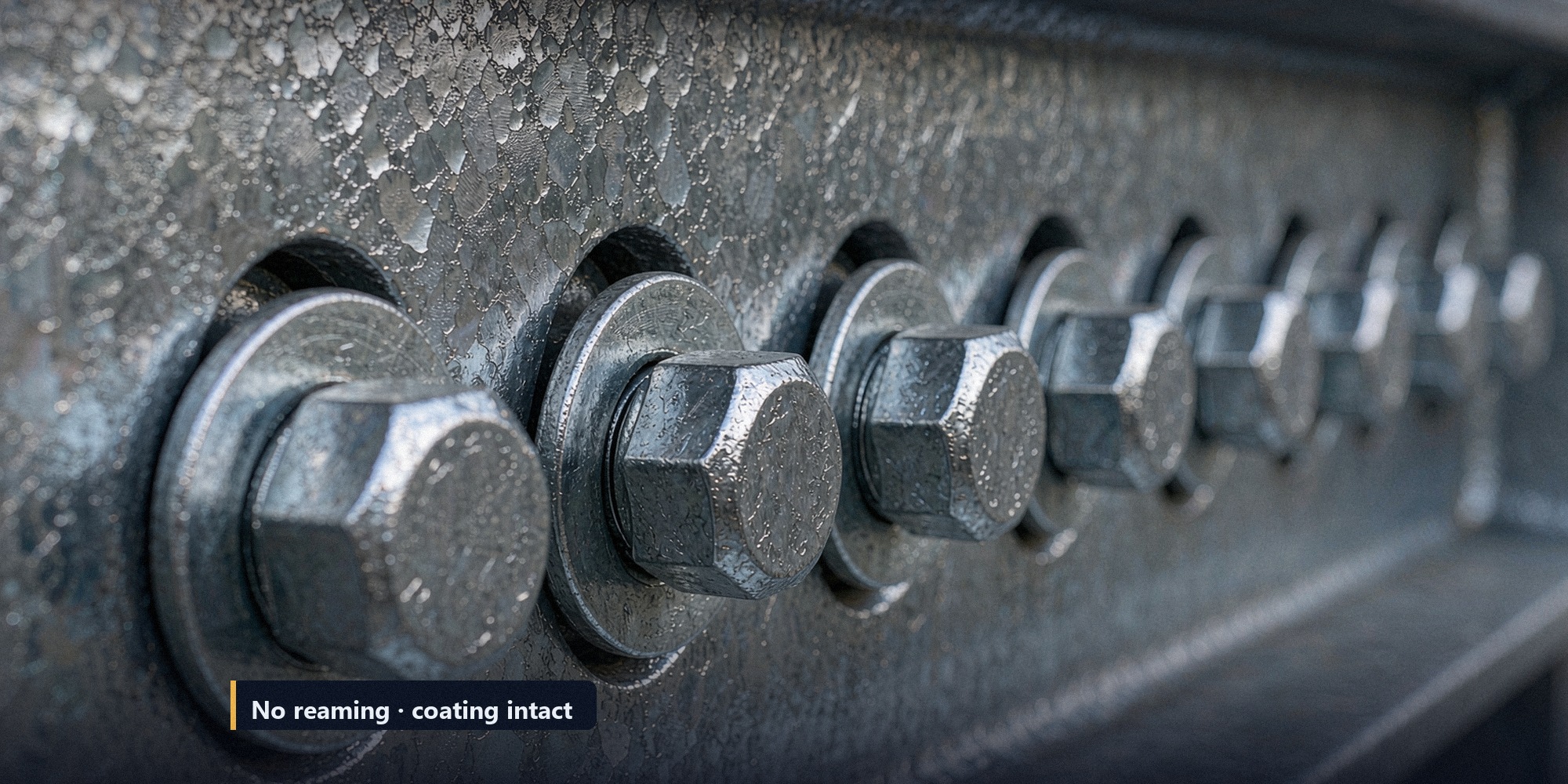
One useful quality indicator is the first-time bolt insertion rate: the proportion of specified bolt holes through which the bolts can be inserted without enlarging or reworking the holes.
A high first-time insertion rate can reduce the need for on-site hole enlargement, help preserve protective coatings and connection performance, and simplify inspection and acceptance.
Assembly Sections and Lifting: Weight, Center of Gravity, and Lifting Points
Trial assembly also helps verify the proposed assembly and lifting sections.
Section weight, center-of-gravity location, and lifting-point arrangements determine the crane capacity required on site, the crane’s positioning, and whether additional turning or repositioning operations are necessary.
Measurements taken in the workshop are generally more reliable than estimates made from drawings alone.
This is particularly important for overseas projects, where lifting equipment is often rented locally and available crane capacity and operating conditions may be limited. Trial-assembling the sections in the factory helps verify the lifting plan before shipment, reducing the risk of last-minute changes on site.
Component Identification and Packing: Reducing Time Spent Searching on Site
Large projects may involve thousands of individual components. Finding the correct member on site depends on clear identification numbers and an accurate packing list.
The identification system used during trial assembly should match the packing list. Components can then be packed and shipped in the planned erection sequence, helping site teams unpack and install them without unnecessary secondary handling or time spent searching for parts.
This may seem like a minor detail, but reducing storage-space requirements and additional handling can be valuable at congested mining sites, ports, and other industrial project locations.
Where Do the Cost Differences Between Workshop and Site Corrections Come From?
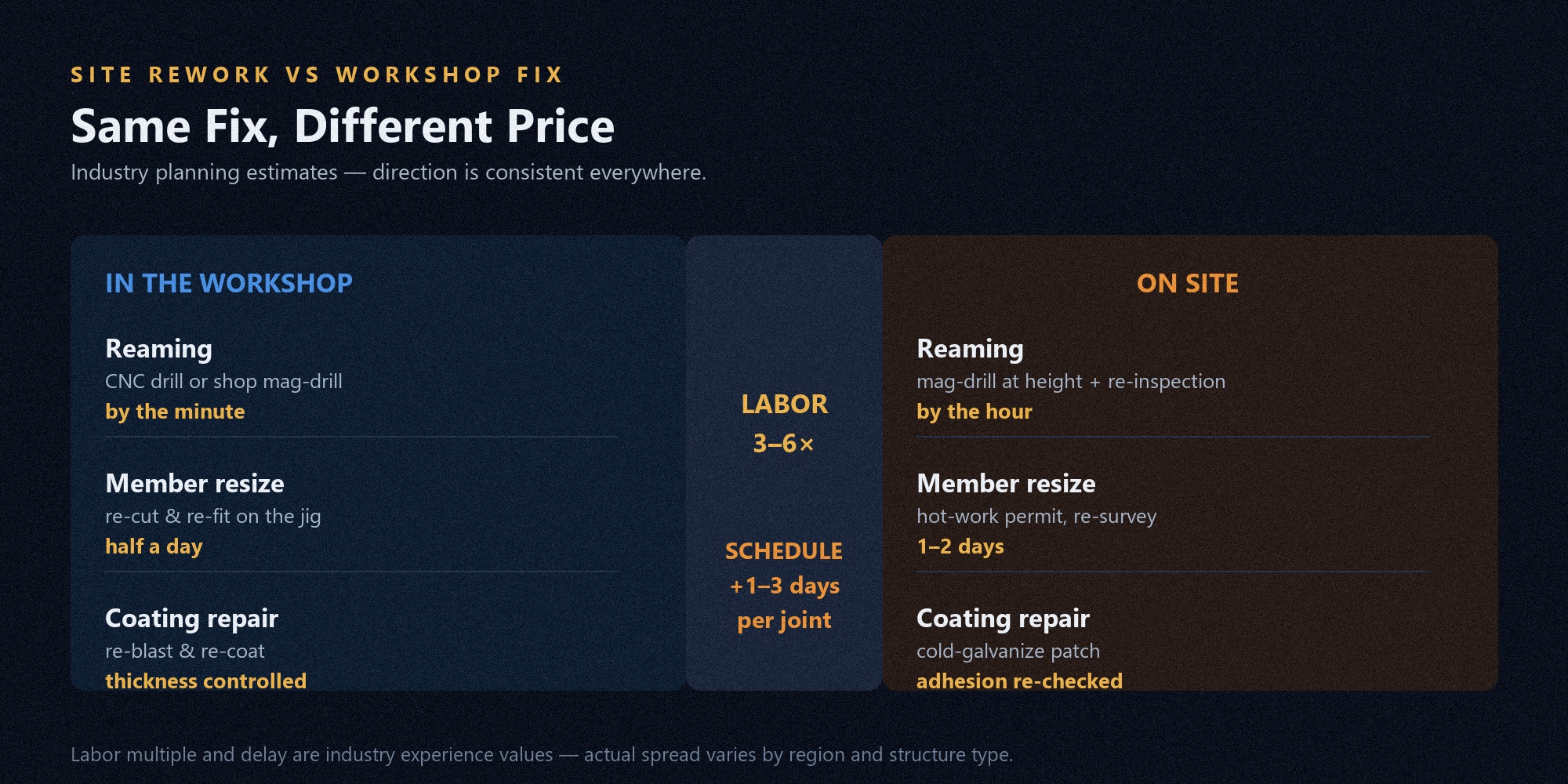
| Item | Workshop Correction | On-Site Correction |
| Hole enlargement or reworking | CNC drilling or workshop magnetic drilling; work may be completed in minutes | Elevated work using magnetic drills, followed by coating repair and inspection; may take hours |
| Member dimensional modification | Cutting and reassembly in the workshop; may take around half a day | Hot-work permits, remeasurement, and coating repair; may take 1–2 days |
| Protective coating repair | Surface preparation and recoating under controlled workshop conditions | Local repair using cold galvanizing products or zinc-rich paint; coating thickness and adhesion may require reinspection |
| Labor cost | Baseline | Approximately 3–6 times the workshop cost (experience-based estimate) |
| Schedule impact | Generally limited if identified before shipment | Approximately 1–3 days per affected location (experience-based estimate) |
The cost multipliers and time estimates in this table are indicative engineering-management estimates, not fixed quotations. Actual results vary significantly by region, structure type, project conditions, and repair requirements. However, the general principle remains: corrective work on site is often more expensive than resolving the same issue in the workshop.
When Is Trial Assembly Necessary?
Assessing Requirements by Structure Type
| Project Type | Recommendation | Suggested Trial Assembly Scope | Main Objective |
| Long-span space frames and domes | Strongly consider; may be essential depending on project conditions | Complete assembly of selected zones or critical closure sections | Verify spatial geometry and closure interfaces |
| Coal conveyor trestles and pipe racks | Strongly consider; assess high-risk interfaces carefully | Trial assembly of critical connections between sections intended for elevated installation | Achieve accurate on-site connections |
| Multi-bay portal frames | Recommended where connection or alignment risks justify it | First bay plus one representative bay | Verify bolt-hole alignment and verticality |
| High-rise steel structures and towers | Strongly consider, especially for complex transitions | First column section and transfer-floor connections | Control cumulative dimensional deviations |
| Standard industrial buildings with repetitive components | Selective trial assembly | Sample approximately 10%–20%, where appropriate | Validate jigs, fabrication methods, and assembly procedures |
The key decision criterion is straightforward: Will the cost of a component failing to fit on site exceed the additional time and cost of trial assembly in the factory?
Where the consequences of a mismatch are high and corrective work is difficult, trial assembly should be considered early in the project.
What Do the Standards Say?
The European standard EN 1090-2 treats trial erection as an option to be considered according to project conditions. It may be appropriate when delays to site assembly would have unacceptable consequences or when corrective measures would be extremely difficult.
The UK industry resource SteelConstruction.info explains the relationship between fabrication accuracy and trial assembly in its discussion of steel fabrication accuracy and trial erection.
Automated fabrication has improved dimensional accuracy and reduced the need for complete trial erection in some applications. However, trial assembly can still provide significant value when site delays are costly or corrective work is difficult. Localized trial assembly can also be useful for complex connections and tightly fitting components.
In other words, trial assembly is not universally mandatory. The standard provides a framework for deciding when it is justified. Owners and main contractors can use this framework when agreeing on the scope of trial assembly with the steel fabricator.
ZM-Besta’s Approach to Factory Trial Assembly
What Can Be Completed in the Workshop?
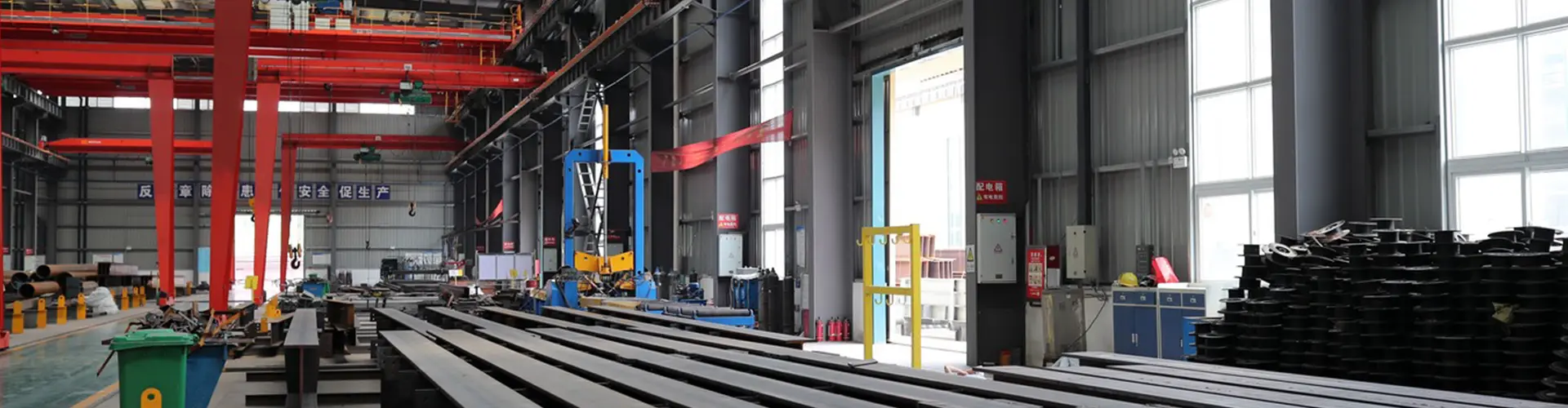
Besta operates five major production bases with a total factory area of 300,000 square meters. Its production facilities include light steel structure production lines, heavy steel structure production lines, secondary CNC precision machining lines, space frame production lines, and physical and chemical testing laboratories.
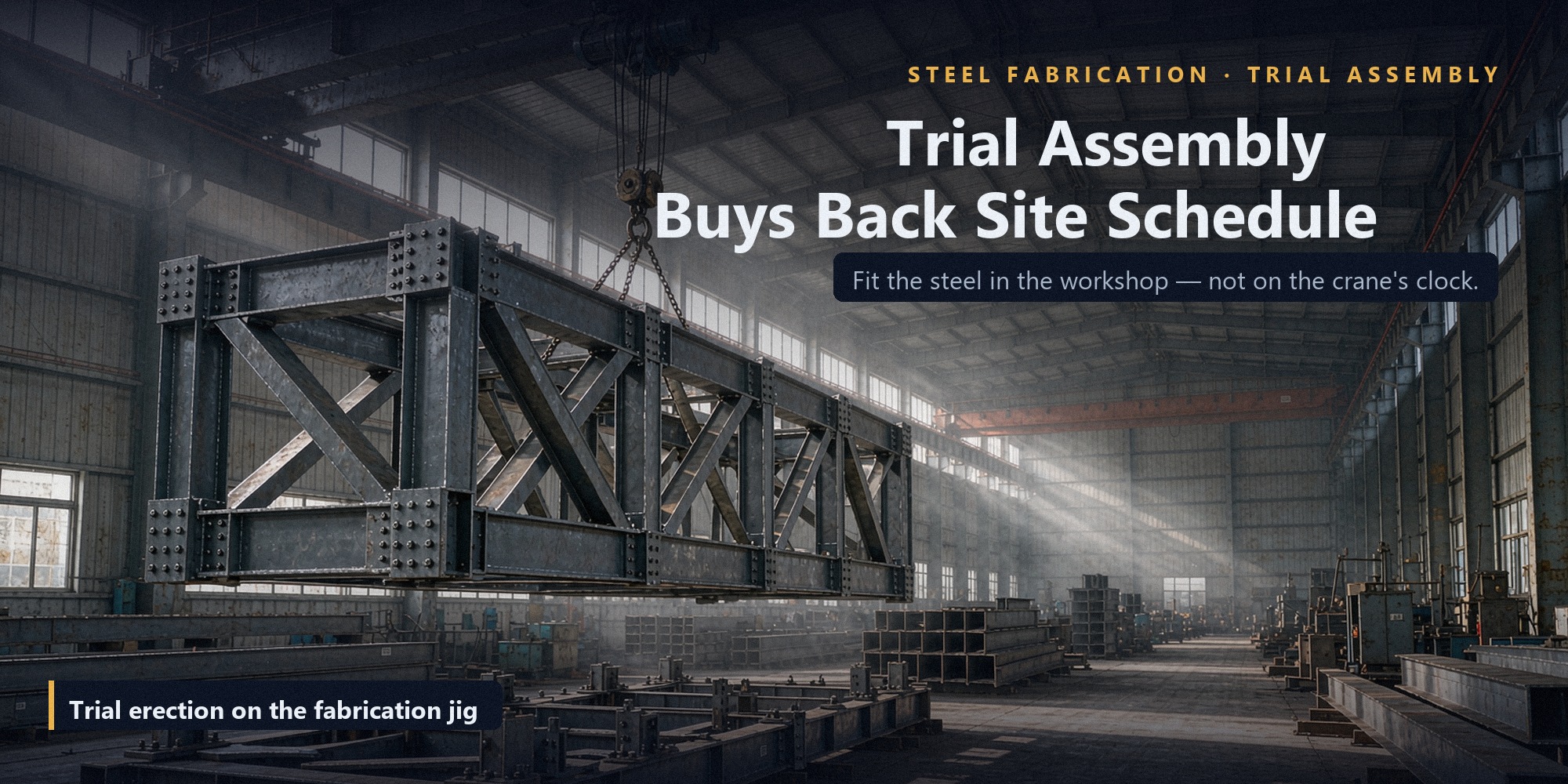
Factory trial assembly is carried out on dedicated assembly jigs. The process can include section assembly, bolt-hole alignment checks, measurement of lifting points and center of gravity, and component identification marking. These checks are completed before shipment, according to the project requirements.
Overseas Projects: Identification, Packing, and Ocean Freight
For overseas projects, trial assembly serves an additional purpose: verifying the packing and shipping plan.
Container dimensions and breakbulk cargo loading restrictions can determine the maximum dimensions of each assembly section. During factory trial assembly, the team can also check whether sections can fit into the planned containers, whether lifting points are suitable for unloading at the port, and whether component identification numbers match the packing list.
Reducing on-site cutting and corrective fitting starts with resolving potential issues before shipment.
To discuss the appropriate trial assembly scope and sectioning plan for your project, send us your structural drawings and project location.
Email: info@xzbesta.com
Frequently Asked Questions
Q1: How much additional time does trial assembly require?
Depending on project size and complexity, trial assembly may add approximately 3–7 days to the fabrication schedule. In return, it can help improve the efficiency of on-site erection, with some projects potentially saving 1–3 weeks during the site installation stage. Actual results depend on structural complexity and the number of assembly sections.
Q2: Does every project require complete trial assembly?
No. For standardized components with a high degree of repetition, validated jigs and first-article inspection may be sufficient, supplemented by selective trial assembly of approximately 10%–20% where appropriate. Full-section or more extensive trial assembly is more worth considering for long-span structures, complex connections, and projects with short lifting windows.
Q3: Can trial assembly replace on-site inspection and acceptance?
No. Trial assembly verifies the fit between components and their geometric relationships. On-site inspection must still cover foundation grid lines, anchor bolts, verticality, final tightening of high-strength bolts, and coating damage. These are separate stages of quality control.
Q4: Is trial assembly useful for overseas projects where large cranes are unavailable on site?
It can be particularly valuable. When lifting equipment is limited, section weight and lifting-point locations must be carefully verified. Measuring the center of gravity and checking lifting points in the factory helps the site team follow the lifting plan and reduces the risk of discovering that the available crane capacity is insufficient.
Q5: How can deformation during transportation be prevented after trial assembly?
Through an appropriate temporary support and cargo-securing plan. Assembly sections can be fitted with temporary bracing and clearly marked lifting points before shipment. During ocean freight, cargo should be secured according to the approved lashing plan. For large components, structural checks under transportation load cases may also be required.