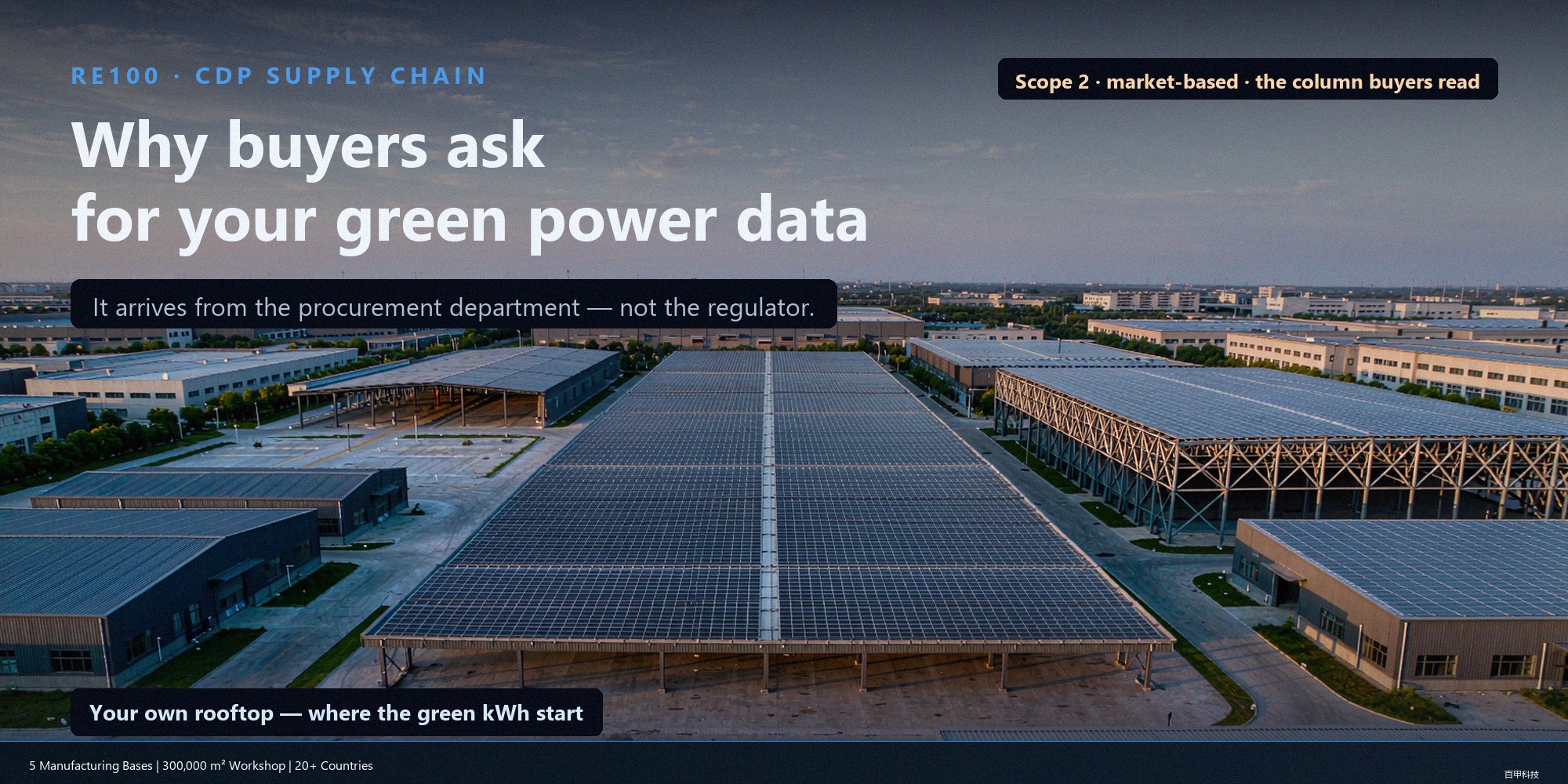
Over the past two years, more and more manufacturing companies have received environmental data questionnaires from their customers. These requests do not come from regulatory authorities, but from procurement departments. Instead of asking about prices and delivery schedules, buyers want to know where the electricity comes from and how much carbon is emitted.
Behind this trend are two major initiatives, RE100 and CDP, which are extending carbon reduction requirements from global brands to their suppliers.
This article explains three key questions: why customers request this data, how Scope 2 emissions are calculated, and what options manufacturers have to reduce their electricity-related emissions.
If you need an assessment of a self-generation and self-consumption solution for your industrial facility, please provide your available rooftop area, roof structure details, and electricity bills for the past 12 months.
Email: info@xzbesta.com
Why Are Customers Suddenly Asking for Your Renewable Electricity Data?
How RE100 Commitments Extend to the Supply Chain
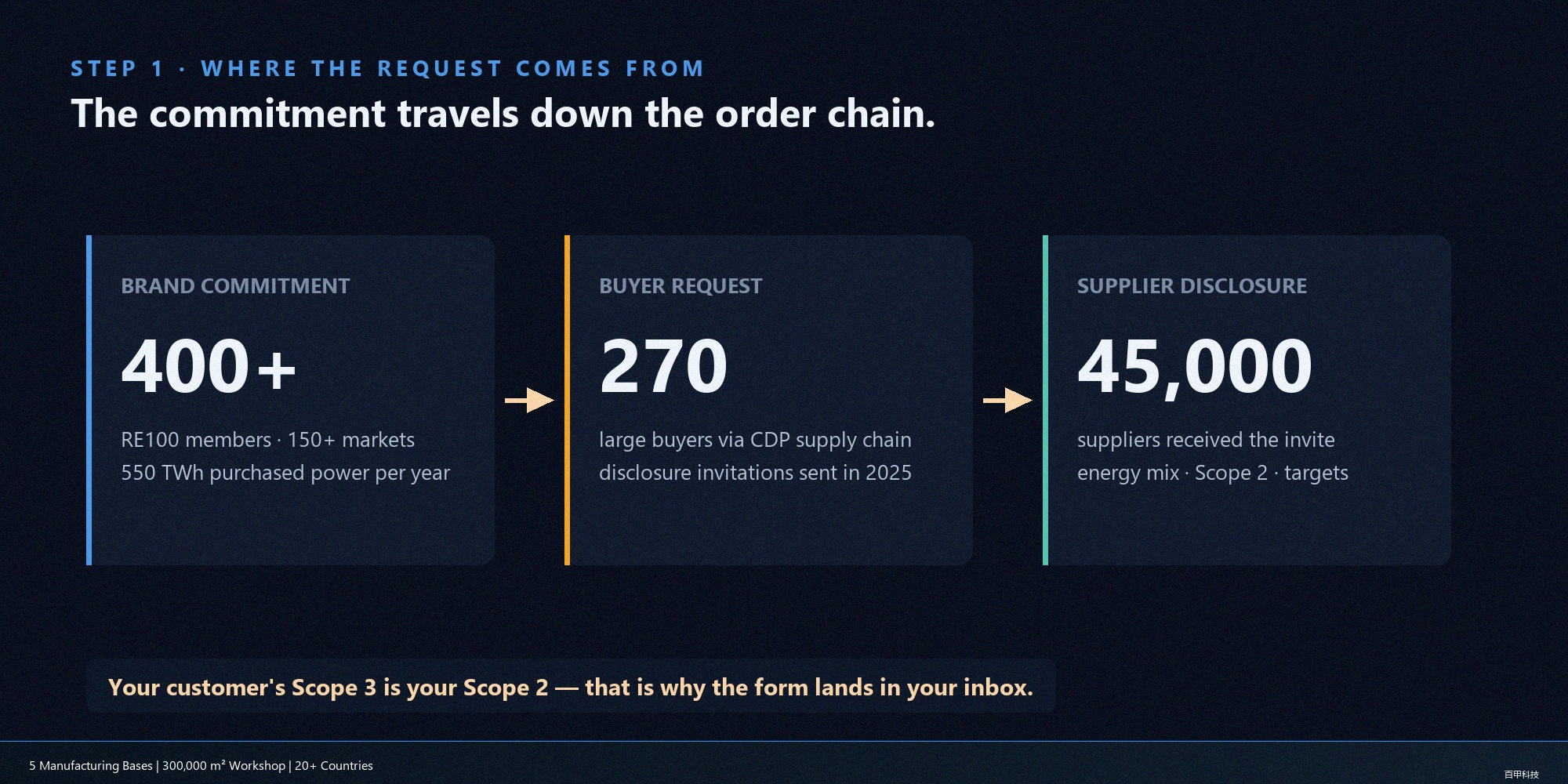
RE100, led by The Climate Group, currently has more than 400 member companies operating across more than 150 markets, with combined annual electricity consumption exceeding 550 TWh. Members commit to sourcing 100% of their electricity from renewable sources by no later than 2050.
The key lies in the boundaries of these commitments. In a member company’s emissions inventory, emissions from purchased electricity fall under Scope 2, while emissions across its value chain, including those from suppliers, fall under Scope 3.
To meet their commitments, global brands need their suppliers to provide electricity consumption data. As a result, decarbonization pressure moves down the supply chain through purchase orders and eventually reaches manufacturing facilities.
For suppliers, providing this data is gradually shifting from an optional request to a requirement attached to contract renewals and bidding processes.
How the CDP Questionnaire Works in Practice
CDP is another important link in this process. In 2025, 270 major purchasing organizations used the CDP Supply Chain program to invite approximately 45,000 suppliers to disclose their environmental information.
After receiving an invitation, suppliers complete a questionnaire covering electricity consumption, energy mix, emissions data, and reduction targets. Buyers receive structured data that can be compared across suppliers and used for supplier assessment and classification.
A clearly completed questionnaire sends an important message to customers: this supplier understands its emissions and knows how to reduce them.
How Are Scope 2 Emissions Actually Calculated?
The Location-Based Method: Using the Average Grid Emission Factor
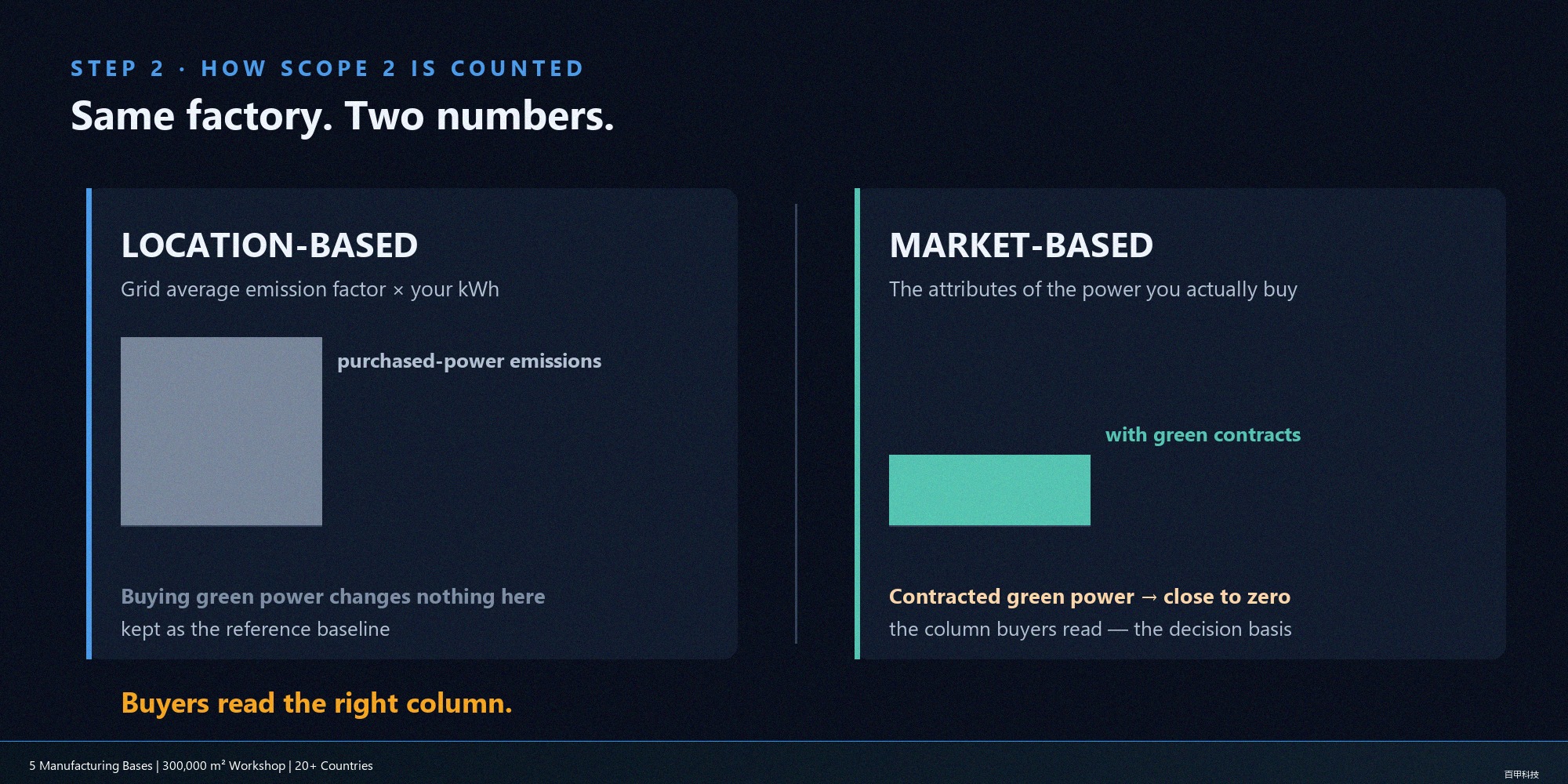
The location-based method calculates emissions by multiplying electricity consumption by the average emission factor of the local electricity grid. The applicable factor depends on the grid where the manufacturing facility is located, regardless of the type of electricity the company purchases.
The advantage of this method is that it provides a consistent and comparable accounting approach. However, it does not recognize a company’s renewable electricity purchasing decisions. No matter how much renewable electricity a company purchases, its location-based emissions figure remains unchanged.
The Market-Based Method: Based on the Electricity You Actually Purchase
The market-based method calculates emissions according to the contractual electricity attributes a company actually purchases. When a company purchases renewable electricity, the corresponding portion of its electricity consumption can be accounted for using the applicable renewable electricity emission factor, which is close to zero.
Customers and investors often pay particular attention to market-based emissions because this method reflects a company’s electricity procurement choices. The GHG Protocol Scope 2 Guidance sets out clear requirements: contractual instruments must meet eight quality criteria to serve as reliable data sources for market-based accounting.
Comparing the Two Accounting Methods
| Accounting Method |
Calculation Basis |
Does Renewable Electricity Procurement Make a Difference? |
How Do Customers Use It? |
| Location-Based Method |
Average emission factor of the local electricity grid |
No. The calculated figure remains the same regardless of renewable electricity purchases. |
Used as a baseline reference |
| Market-Based Method |
Attributes of the electricity actually purchased |
Yes. The emissions associated with eligible renewable electricity can be close to zero. |
A key basis for procurement and supplier assessments |
When a factory reports both figures, customers pay particular attention to the market-based result. This also explains why, among manufacturers in the same industry, companies that have adopted renewable electricity solutions can achieve better positions in supplier assessments.
How to Choose Among Five Renewable Electricity Procurement Options
RE100 recognizes five renewable electricity procurement approaches, each with a different share of overall procurement. The following table ranks them according to their publicly reported shares.
| Procurement Method |
Share |
Applicable Conditions |
Feasibility for Manufacturers |
| Unbundled Energy Attribute Certificates (EACs) |
41% |
A compliant local certificate market is available |
Low entry barrier; supports emissions reduction accounting but does not reduce electricity bills |
| Power Purchase Agreements (PPAs) |
31% |
Long-term electricity demand and the ability to sign multi-year contracts |
Requires stable electricity consumption; difficult for small and medium-sized factories to arrange independently |
| Supplier Contracts |
24% |
Electricity retailers offer renewable electricity products |
Depends on the level of market liberalization in the local electricity market |
| Passive Claims |
2% |
Renewable electricity is included in the default grid mix |
Limited control and relatively limited value |
| Self-Generation and Self-Consumption |
2% |
The company owns suitable rooftop or land space |
Requires available roof area or land and investment in generation equipment |
Choosing Between Green Certificates and PPAs
Green certificates address the question of emissions attribution, but they do not determine where the electricity physically comes from or how much it costs. After purchasing eligible certificates, a company can reduce its market-based Scope 2 emissions figure, while its electricity bill remains unchanged.
A PPA, on the other hand, can help secure long-term electricity prices. However, it requires the company to commit to a specified electricity volume and contract period. Factories with unstable electricity demand may face disadvantages if they sign long-term agreements.
Self-Generation Has a Small Share, but Offers Greater Stability for Manufacturers
Self-generation and self-consumption account for only 2% of the reported procurement mix. However, manufacturing facilities often have advantages that other businesses do not: large rooftop areas, stable electricity demand, and daytime consumption peaks that can coincide with solar power generation.
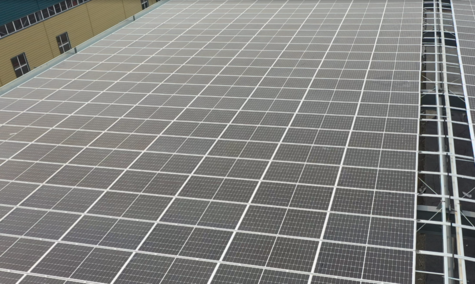
By installing BIPV systems or conventional rooftop solar PV systems, factories can generate electricity for on-site consumption. This electricity can be accounted for as on-site renewable electricity under the applicable Scope 2 accounting requirements, while reducing the amount of electricity purchased from the grid during the day. One investment can deliver two benefits.
This is why manufacturers planning their RE100 transition often prioritize installing their own rooftop solar PV systems and use green certificates to cover the remaining gap.
The Scope 2 Reporting Value of BIPV Systems
How Is On-Site Solar Power Accounted For?
Renewable electricity generated and consumed on-site is not counted as purchased electricity under Scope 2. It directly reduces the amount of electricity purchased from the grid.
Compared with purchasing certificates, this approach has a shorter data trail: generation is recorded by the inverter, electricity consumption is recorded by the meter, and the two sets of records can be matched to provide supporting evidence.
An additional advantage of BIPV is that it also functions as a roofing system. For industrial buildings, a roof is already required. Integrating power generation into the roofing system can result in a lower incremental cost than installing a separate rooftop solar PV system. For more information, see our guide to integrated design of steel structures and BIPV systems.
What Supporting Documents Should Be Retained?
During customer audits, four types of documents are commonly reviewed:
- Grid-connection or off-grid acceptance documents for the installed system.
- Monthly electricity generation records.
- Records showing the relationship between electricity generation and consumption.
- Certification documents for the solar PV modules.
These documents should be archived regularly rather than collected only when a questionnaire needs to be completed. Many factories fail to retain monthly generation records. When an audit takes place, they may find themselves unable to provide the necessary evidence.
Three Steps for Suppliers to Get Prepared
First, Establish Your Emissions Baseline
The first step is to organize the past 12 months of electricity consumption, electricity bills, and applicable emission factors into a single data sheet. Only after establishing this baseline can a company understand its emissions reduction gap and evaluate suitable procurement options.
Next, Determine the Right Procurement Strategy
Prioritize options based on investment and expected returns. If rooftop and site conditions allow, prioritize self-generation and self-consumption. The main difference between BIPV and conventional solar PV panels lies in how the solar PV system is integrated with the building roof. Factories with stable electricity demand and access to a mature local PPA market can consider long-term power purchase agreements. The remaining electricity consumption gap can be covered through green certificates.
These options are not mutually exclusive. In practice, most companies combine multiple approaches to meet their renewable electricity targets.
Finally, Establish a System for Data Retention
Create a monthly record covering electricity generation, total electricity consumption, grid electricity purchases, and green certificate retirement records. This data record serves not only as supporting evidence for customer questionnaires and audits, but also as a basis for preparing the following year’s energy budget.

Frequently Asked Questions
Q1: Do manufacturers without export business still need to provide renewable electricity data?
It depends on their customer base. If a company supplies multinational brands or their Tier 1 suppliers, it is likely to be asked to complete environmental data questionnaires. Companies serving only local customers may face less pressure in the short term.
Q2: Does purchasing green certificates reduce Scope 2 emissions to zero?
No. Under the market-based method, eligible renewable electricity purchases can be accounted for using the applicable renewable electricity emission factor. The location-based emissions figure remains unchanged. Both accounting results should be disclosed.
Q3: If electricity generated by a BIPV system is consumed on-site, does it count as a green certificate?
The environmental attributes of renewable electricity generated and consumed on-site can be retained by the company, subject to applicable accounting and regulatory requirements. Additional certificates are not required for that same electricity. However, complete electricity generation and consumption metering records must be maintained as supporting evidence.
Q4: What if the available rooftop area is insufficient?
Install solar PV on the available suitable roof area first, then use green certificates or PPAs to cover the remaining gap. You can also use an analysis of industrial electricity prices and rooftop solar PV payback periods to determine which rooftop areas should be prioritized.
Q5: What documents are checked during an audit?
The main documents include electricity generation metering records, electricity purchase contracts, green certificate retirement records, and certification documents for solar PV modules and systems. The reporting periods covered by all four types of documents must be consistent.