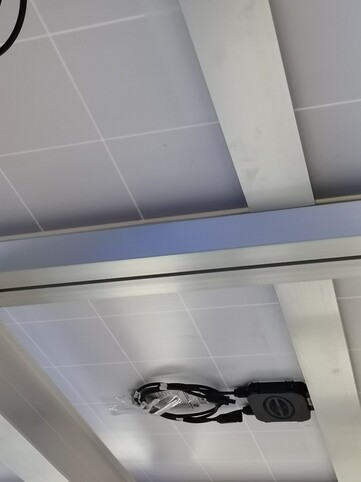
After a building-integrated photovoltaics (BIPV) roof is installed, one of the most easily overlooked O&M tasks is cleaning.
Designs undergo review, construction is inspected, and grid connection is tested. But cleaning often receives far less attention. By the time the owner notices a drop in power generation, soiling losses may already have accumulated over an entire year.
This guide answers three key questions: How much power generation is lost without cleaning? How often should a BIPV roof be cleaned? And how can it be cleaned without damaging the system?
The Cost of Neglecting Cleaning: How Much Energy Is Lost to Soiling?
Climate Determines the Scale of Soiling Losses
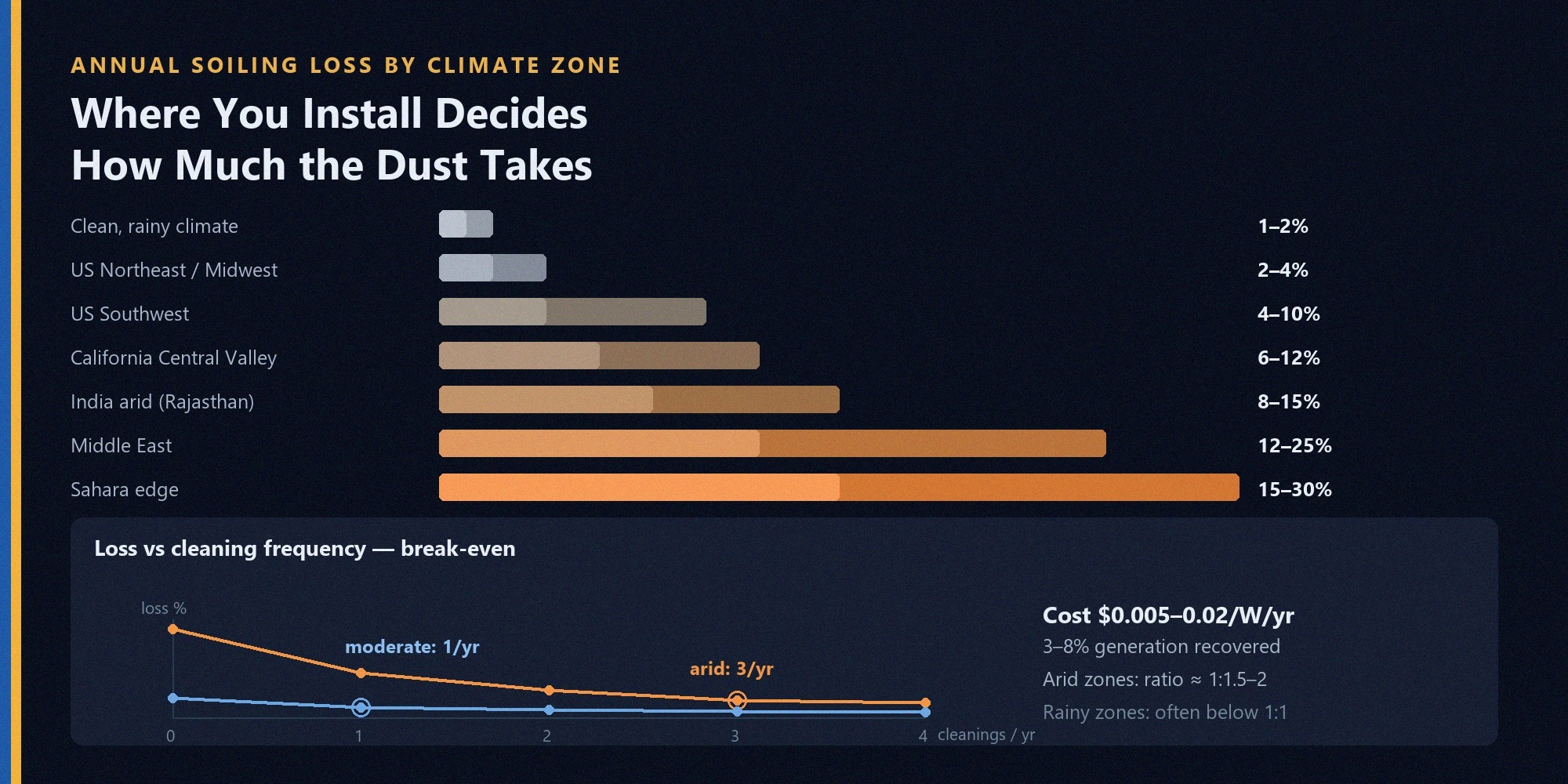
Soiling losses are not fixed. They depend on local rainfall, airborne dust concentration, module tilt angle, wind speed, and other environmental conditions.
| Climate Zone |
Annual Soiling Loss |
Key Characteristics |
| Clean climates with frequent rainfall |
1%–2% |
Rainfall provides substantial natural cleaning |
| Northeastern and Midwestern United States |
2%–4% |
Seasonal soiling, with snow in winter |
| Southwestern United States |
4%–10% |
Arid conditions and limited rainfall |
| Central California agricultural areas |
6%–12% |
Agricultural dust combined with dry conditions |
| Arid regions of India, including Rajasthan |
8%–15% |
Dry seasons can last up to nine months |
| Middle East |
12%–25% |
Frequent dust storms and very limited rainfall |
| Semi-arid areas bordering the Sahara |
15%–30% |
Extreme soiling conditions |
The same PV module may experience dramatically different annual soiling losses in Germany and Saudi Arabia. The difference can be more than tenfold. Cleaning strategies should not be applied uniformly across markets. They need to be tailored to the local climate and site conditions.
How Soiling Affects PV Performance
Soiling affects power generation through three main mechanisms.
First: Reduced light transmission. Dust particles absorb and reflect incoming sunlight, reducing the amount of light reaching the solar cells and lowering power output.
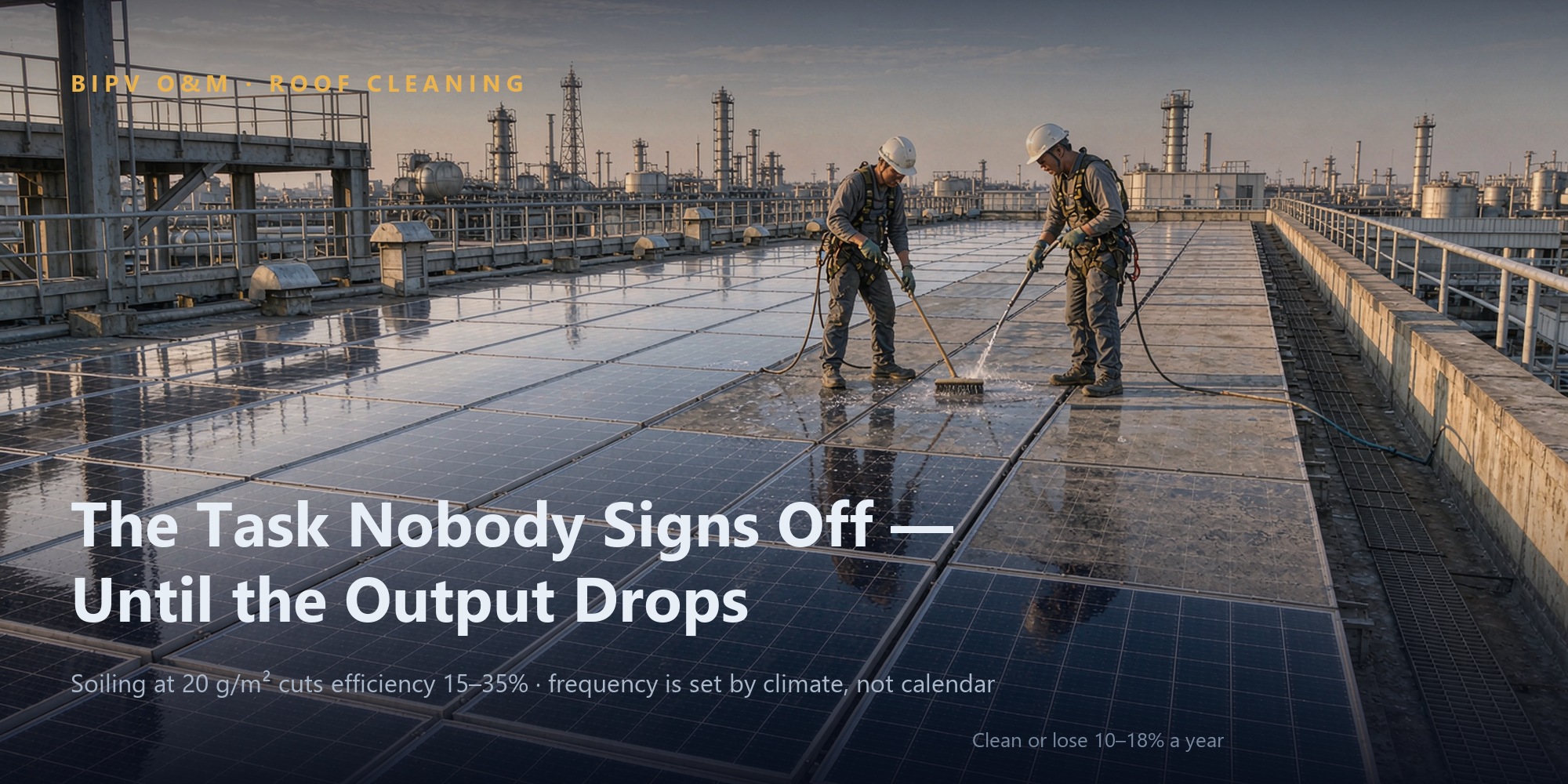
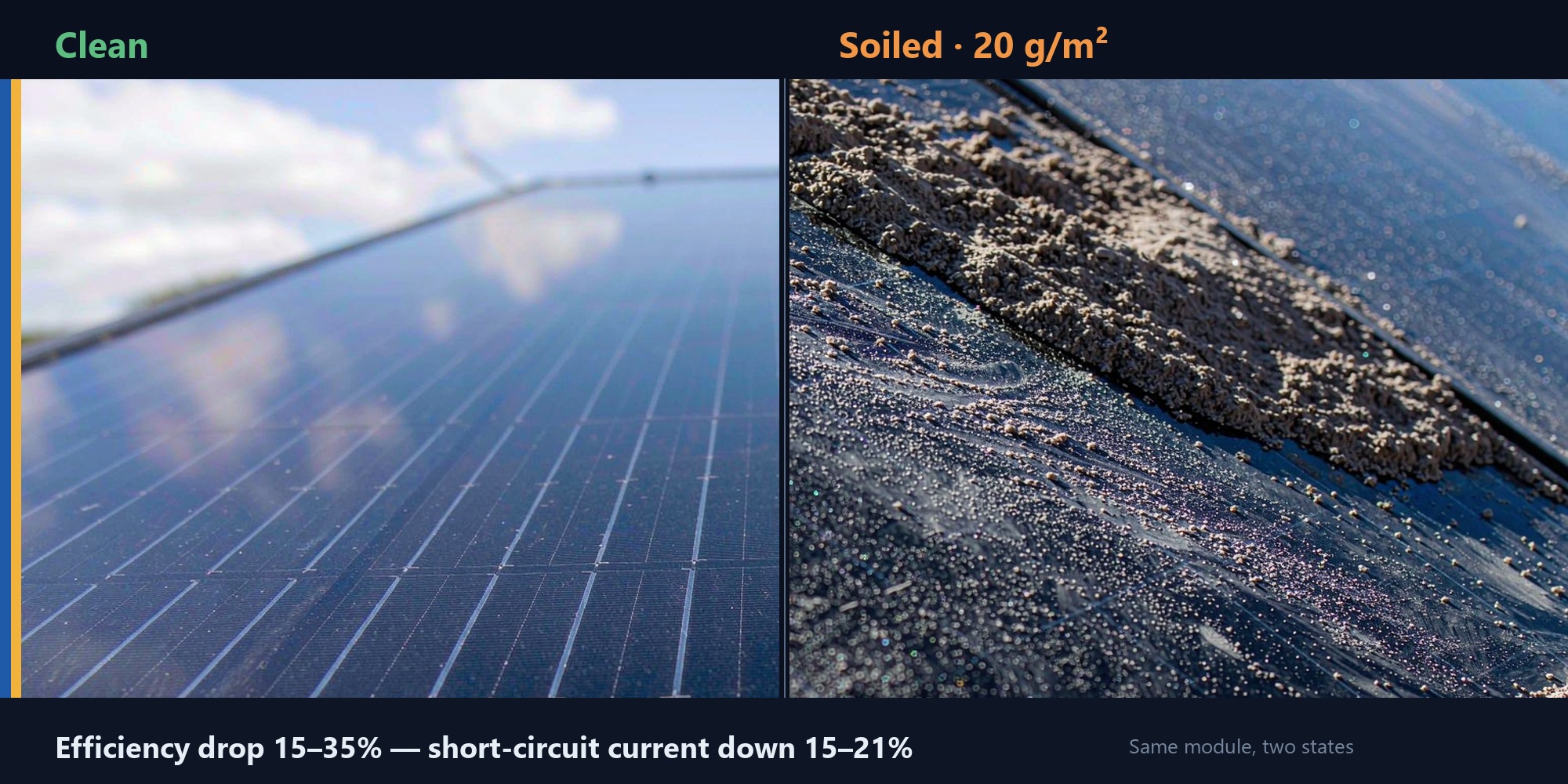
Second: Nonlinear performance degradation as soiling accumulates. When the soiling density reaches a certain level, the impact on performance can become more severe. At a reported soiling density of 20 g/m², short-circuit current may decrease by 15%–21%, while efficiency may decline by 15%–35%, depending on test conditions and the characteristics of the deposited material.
Third: Localized hot spots caused by uneven soiling. When some areas of a module accumulate significantly more dirt than others, partial shading can occur. Shaded cells may dissipate power rather than generate it, creating localized hot spots that accelerate material aging and potentially damage the module.
A Simple Cost-Benefit Analysis
Consider a 1 MW commercial and industrial BIPV rooftop system, assuming annual electricity generation of 1,200 MWh and an electricity price of $0.15/kWh.
- Annual electricity revenue: Approximately $180,000
- Revenue loss at a 10% annual soiling loss: Approximately $18,000
- Annual cleaning cost at $0.01/W: Approximately $10,000
In arid regions, the return on cleaning expenditure typically ranges from 1:1.5 to 1:2. In rainy regions, it may fall below 1:1, making cleaning uneconomical.
How Often Should a BIPV Roof Be Cleaned?
Set Cleaning Frequency According to the Environment
| Environmental Conditions |
Suggested Cleaning Frequency |
Key Considerations |
| Temperate, rainy climates with annual rainfall above 800 mm |
1–2 times per year |
Mainly remove bird droppings, tree sap, and other persistent contaminants |
| General industrial areas |
2–4 times per year |
Consider the rate of industrial dust deposition |
| Urban areas and sites near major roads |
3–4 times per year |
Traffic-related particles may adhere strongly to surfaces |
| Arid and dusty regions |
Once per month during the dry season |
Consider additional cleaning within 48 hours after a dust storm, when safe and practical |
| Extremely arid regions in the Middle East and North Africa |
Every 1–2 weeks during the dry season |
Frequent dust events may require more intensive monitoring |
One often-overlooked point: Cleaning after a dust storm should take priority over the regular cleaning schedule. A single severe dust event can deposit as much dust as would normally accumulate over an entire month.
Use Performance Ratio (PR) as a Cleaning Trigger
If the PV system has a monitoring platform, triggering cleaning based on the performance ratio (PR) can be more economical than following a fixed schedule.
A practical approach is to establish a baseline PR curve and consider cleaning when the measured PR falls by 2% relative to the baseline. This threshold can help identify potential soiling losses while avoiding unnecessary cleaning.
However, PR can also decline because of inverter efficiency changes, module temperature, equipment faults, degradation, or other operating conditions. These factors should be investigated before attributing the decline to soiling.
BIPV Roof Cleaning Methods: A Cost Comparison
Common Cleaning Methods
| Cleaning Method |
Water Consumption |
Relative Cost |
Typical Applications |
Cleaning Performance |
| Manual cleaning with a soft-bristle brush and water |
1–2 L per module |
High; labor-intensive |
Small rooftops and complex roof geometries |
Excellent |
| Dry-cleaning robots |
None |
Medium; relatively high initial investment |
Large, flat rooftops and ground-mounted PV plants |
Good |
| Water-spraying robots |
0.5–1 L per module |
Medium |
Large commercial and industrial rooftops |
Very good |
| Drone-assisted cleaning |
Low |
High |
Elevated or difficult-to-access rooftops |
Moderate |
| Dry brushing or vibration-based dust removal |
None |
Low |
Water-scarce regions |
Moderate |
The annual cleaning cost typically ranges from $0.005 to $0.02 per watt, depending on roof accessibility, labor costs, and the cleaning method used.
The Role of Anti-Soiling Coatings
Anti-soiling coatings, including hydrophilic and hydrophobic nano-coatings, are not a replacement for cleaning. Instead, they help reduce dirt accumulation and extend cleaning intervals.
Field tests have reported that PV modules with anti-soiling coatings accumulate 30%–40% less dust between cleaning cycles than uncoated modules. However, reported coating service lives vary considerably, ranging from 18–24 months to 3–5 years. Actual durability should be verified against supplier test data.
Although anti-soiling coatings require a relatively high upfront investment, they may reduce the number of cleaning operations by approximately one-third over the long term. In arid, dusty regions, the investment can often be economically justified.
Four Common BIPV Roof Cleaning Mistakes
Using Hard Water
This can be one of the costliest cleaning mistakes.
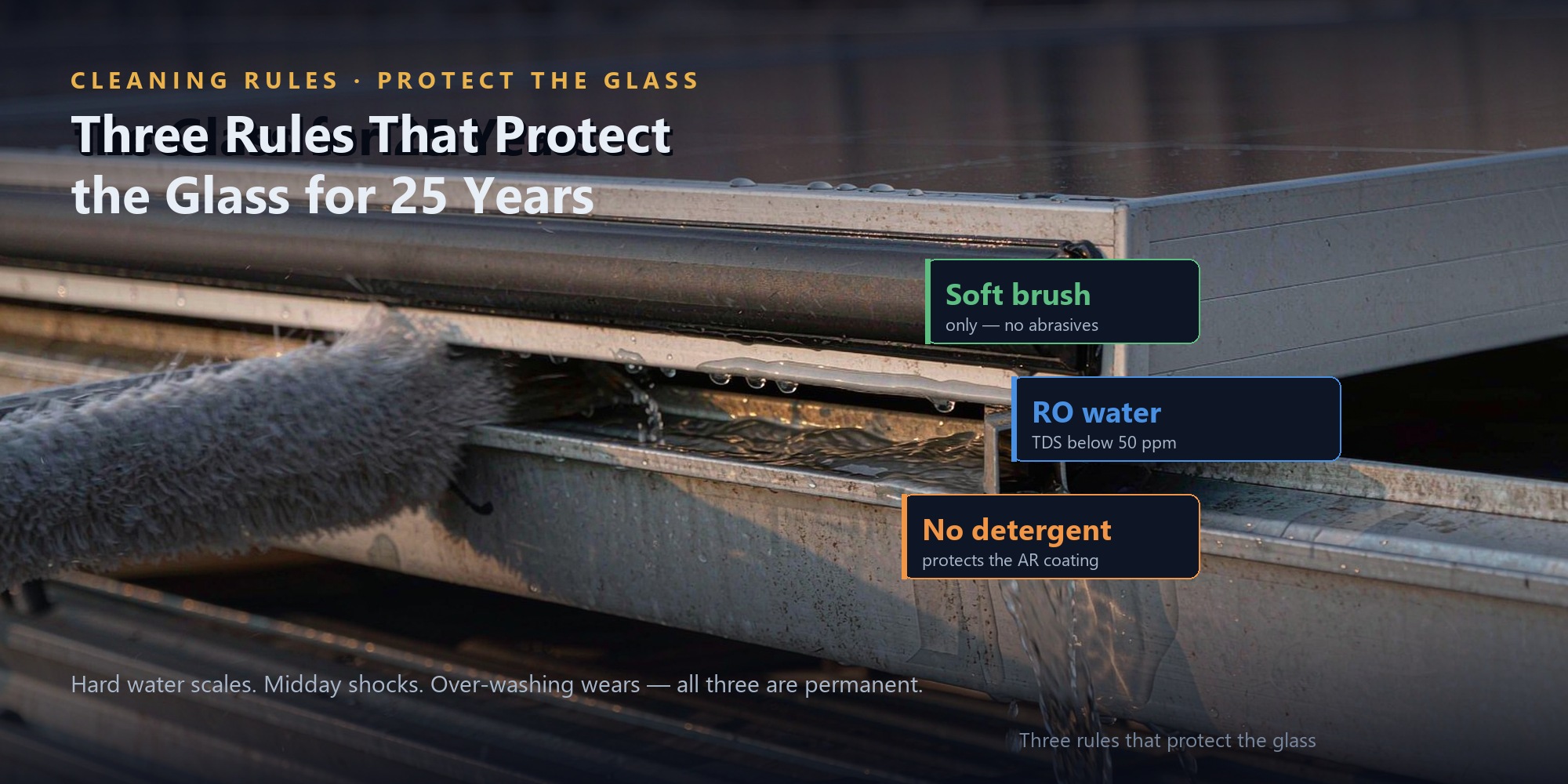
When groundwater has a total dissolved solids (TDS) concentration above 500 ppm, water sprayed onto hot glass may evaporate rapidly, leaving calcium and magnesium deposits. After 3–4 cleaning cycles, these deposits may cause a permanent 2%–4% reduction in glass light transmittance and may be difficult or impossible to remove.
Recommended practice: Use reverse-osmosis (RO) water or deionized water, with TDS controlled below 50 ppm.
Cleaning During Peak Midday Heat
Spraying cold water onto PV modules at temperatures above 60°C can create thermal stress in the glass, potentially causing microcracks or, in severe cases, glass breakage.
Recommended practice: Clean in the early morning or late afternoon, when module temperatures are closer to ambient temperature.
Cleaning Too Frequently
In low-soiling environments, monthly cleaning may cost more than the additional electricity generation is worth. Another concern is surface wear. Dry brushing and scraping can leave microscopic scratches on the glass. Over time, these scratches may reduce light transmittance, potentially offsetting the benefits of cleaning.
Using Cleaning Agents
Some cleaning agents may damage the anti-reflective (AR) coating on the glass. AR coatings can improve light transmission by approximately 2%–3%, depending on the product. If the coating is damaged, some of this performance benefit may be permanently lost.
Recommended practice: Use clean water and a soft-bristle brush. For stubborn contaminants, such as bird droppings or tree sap, use a soft cloth dampened with water to clean the affected area.
Three Design Decisions That Can Reduce Cleaning Costs
Roof Tilt and Drainage Paths
Roof surfaces with a tilt angle of 15° or more can benefit from gravity-assisted runoff, helping remove some accumulated dust and improving natural cleaning under suitable rainfall conditions.
Drainage paths should be designed to prevent standing water. Once stagnant water evaporates, it can leave water stains and mineral deposits that are more difficult to remove than loose dust.
Cleaning Access Routes
For large rooftops, cleaning routes and safe access paths should be incorporated into the design from the outset. Without dedicated access routes, cleaning costs can potentially double because equipment cannot reach the roof efficiently and hoses may not cover all areas.
Safety must also be considered, including guardrails, lifeline anchor points, and appropriate fall-protection systems.
Maintenance Connections
Reserve space for water supply connections, drainage outlets, and equipment storage areas. These provisions are generally inexpensive to incorporate during construction. Retrofitting them after commissioning may require modifications to the completed roof, increasing both cost and operational disruption.
Frequently Asked Questions
Q1: Do BIPV roofs need cleaning? How are they different from conventional PV systems?
Yes. Since BIPV modules form part of the roof itself, cleaning must consider not only power generation but also roof appearance and waterproofing. One key difference is that BIPV modules are often not designed to support foot traffic, and some products have specific load-bearing limitations. Cleaning access routes and procedures must therefore be designed specifically for the system.
Q2: Can rainfall replace manual cleaning?
Partially. Rain can wash away loose dust, but it is generally ineffective against stubborn contaminants such as bird droppings, tree sap, and industrial oil residues. Even in rainy regions, manual cleaning may still be necessary 1–2 times per year.
Q3: Can cleaning damage PV modules?
Proper cleaning should minimize the risk of damage. The main risks include mineral deposits caused by hard water, thermal stress from cleaning hot modules with cold water, and scratches caused by abrasive materials or hard-bristle brushes. Following the manufacturer’s cleaning instructions and avoiding these practices can help protect the modules.
Use this simple formula: Cleaning Cost Ratio = Annual Cleaning Cost ÷ (Annual Soiling Loss × Annual Electricity Revenue)
A ratio below 1 indicates that the estimated recoverable revenue loss exceeds the cleaning cost, suggesting that cleaning may be economically worthwhile. In arid regions, the ratio may be around 0.5, while in rainy regions it may approach or exceed 1.
Q5: Are anti-soiling coatings worth the investment?
They may be worthwhile in regions where annual soiling losses exceed 8%. Some field tests have reported that anti-soiling coatings can reduce dust accumulation by 30%–40%, potentially lowering cleaning frequency. In areas with low soiling levels, however, the return on investment may be limited.
Need a cleaning strategy tailored to your BIPV project location?
Email: info@xzbesta.com