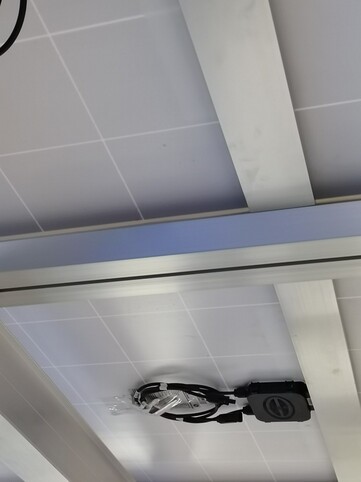
Your project is about to start, but the temporary power supply for construction site is not connected yet. The client is pushing, the workers are waiting, and the air conditioners and computers in the office are all just decoration.
Who do you call at a time like this?
Most people would rent a diesel generator. The reasons are practical enough: cheap, rugged and available anytime. But if you have ever added up the full three-month bill – fuel, maintenance, noise complaints and emission fines – you would think twice.
This article clarifies two things: how a mobile solar power station achieves diesel generator replacement, and how it can deliver power on site within 48 hours.
Temporary Power: The Pitfall Every Project Has to Face
Temporary power may look like a small matter, but getting it wrong is a big deal.
Delayed schedules, burned-out equipment and contract penalties often trace back to a single unreliable power source.
Three Temporary Scenarios, Three Power Bills
Loads and power supply cycles differ completely across scenarios; choose the wrong solution and the cost can double.
| Scenario |
Typical load |
Peak power |
Supply cycle |
The biggest pitfall |
| Site office |
Air conditioning, computers, lighting, water dispensers |
10-50 kW |
Months to years |
Voltage instability damages equipment |
| Exhibition/roadshow |
Sound systems, lighting, cooling, catering |
30-200 kW |
3-15 days |
Noise complaints, high rental costs |
| Field camp |
Accommodation, catering, communications, refrigerators |
30-100 kW |
Weeks to months |
Difficult fuel resupply, unattended operation |
The Four Real Costs of a Diesel Generator
When you rent a diesel generator, the quotation usually shows only the rental fee. But the real costs are:
Fuel: At full load, a diesel generator consumes about 220-250 g/kWh. A 50 kW unit running 8 hours at full load burns about 110-130 liters of diesel, costing roughly USD 100 per day.
Fuel delivery: Diesel must be delivered to the site regularly. On remote sites, the delivery cost is often higher than the fuel itself.
Maintenance and supervision: Oil changes, filter replacements, and someone has to watch over it. Solar systems require about 80% less maintenance than diesel generators.
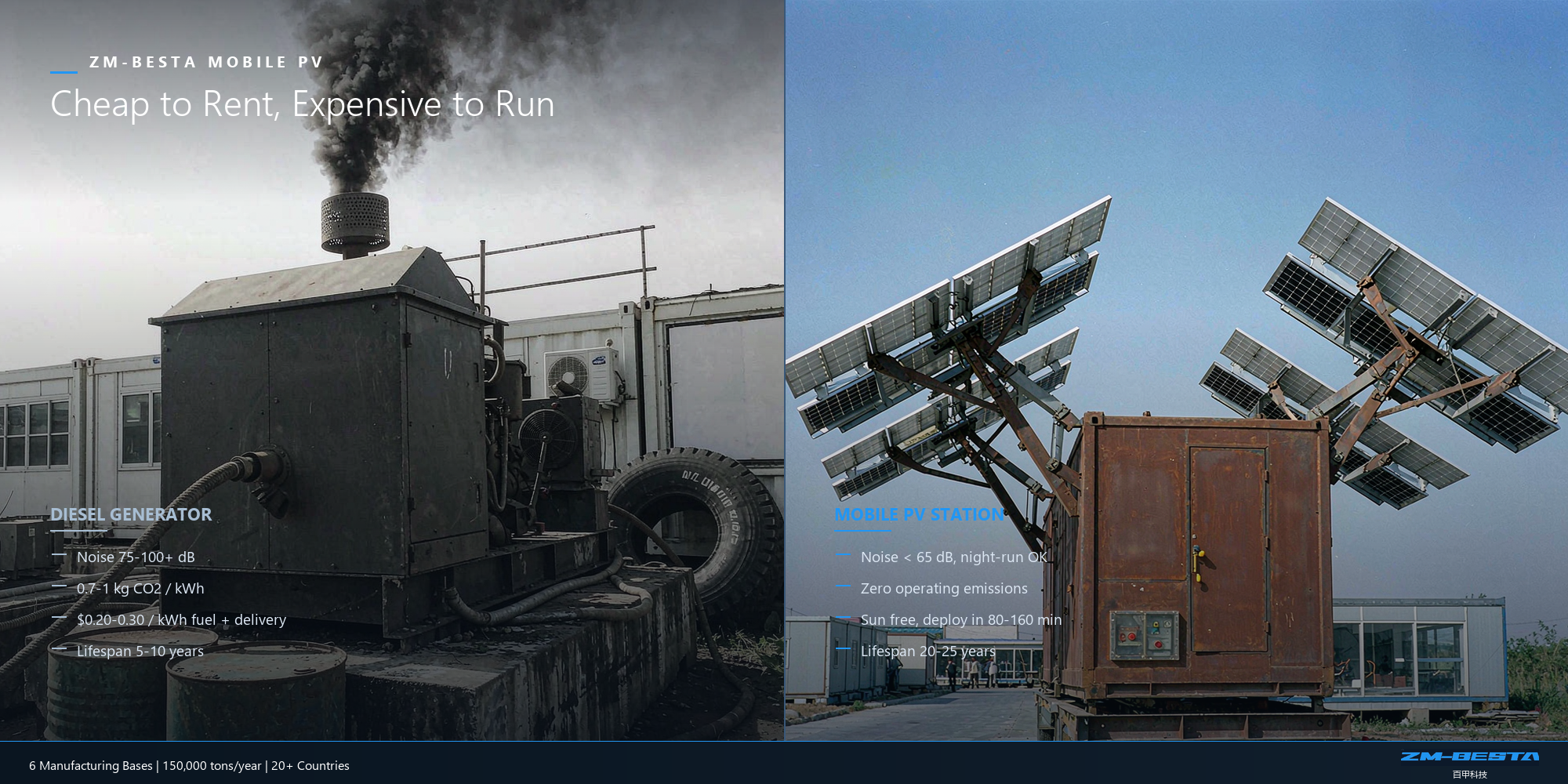
Noise and emissions: Diesel generators typically produce 75-100+ dB of noise and are often complained about near residential areas. Each kWh generated emits about 0.7-1 kg of CO₂; a 50 kW unit running 8 hours a day emits about 280-400 kg of CO₂.
Cheap to rent, expensive to use. That is the biggest lie of the diesel generator.
How to Replace Diesel Generators: With a Mobile Solar Power Station
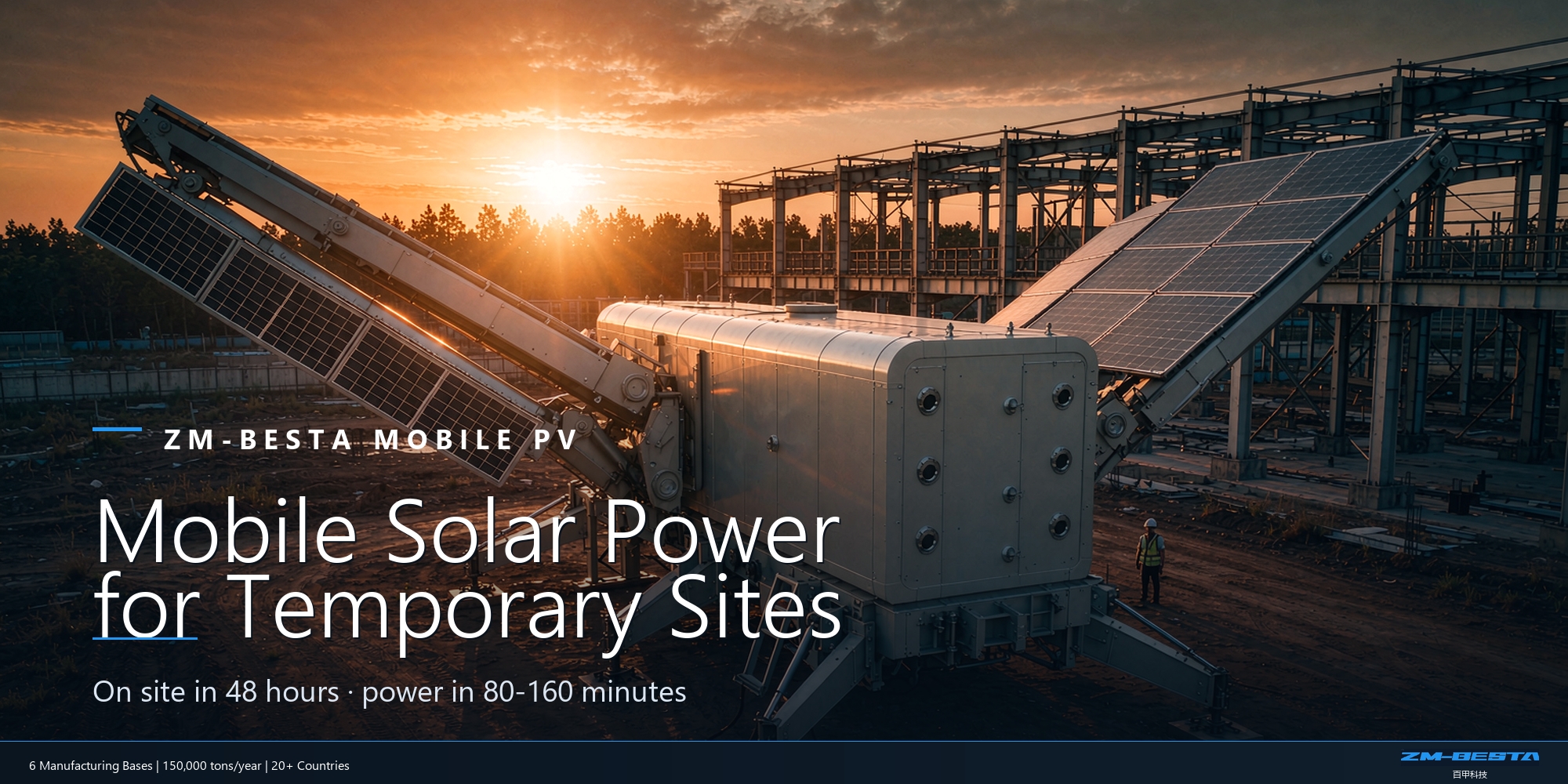
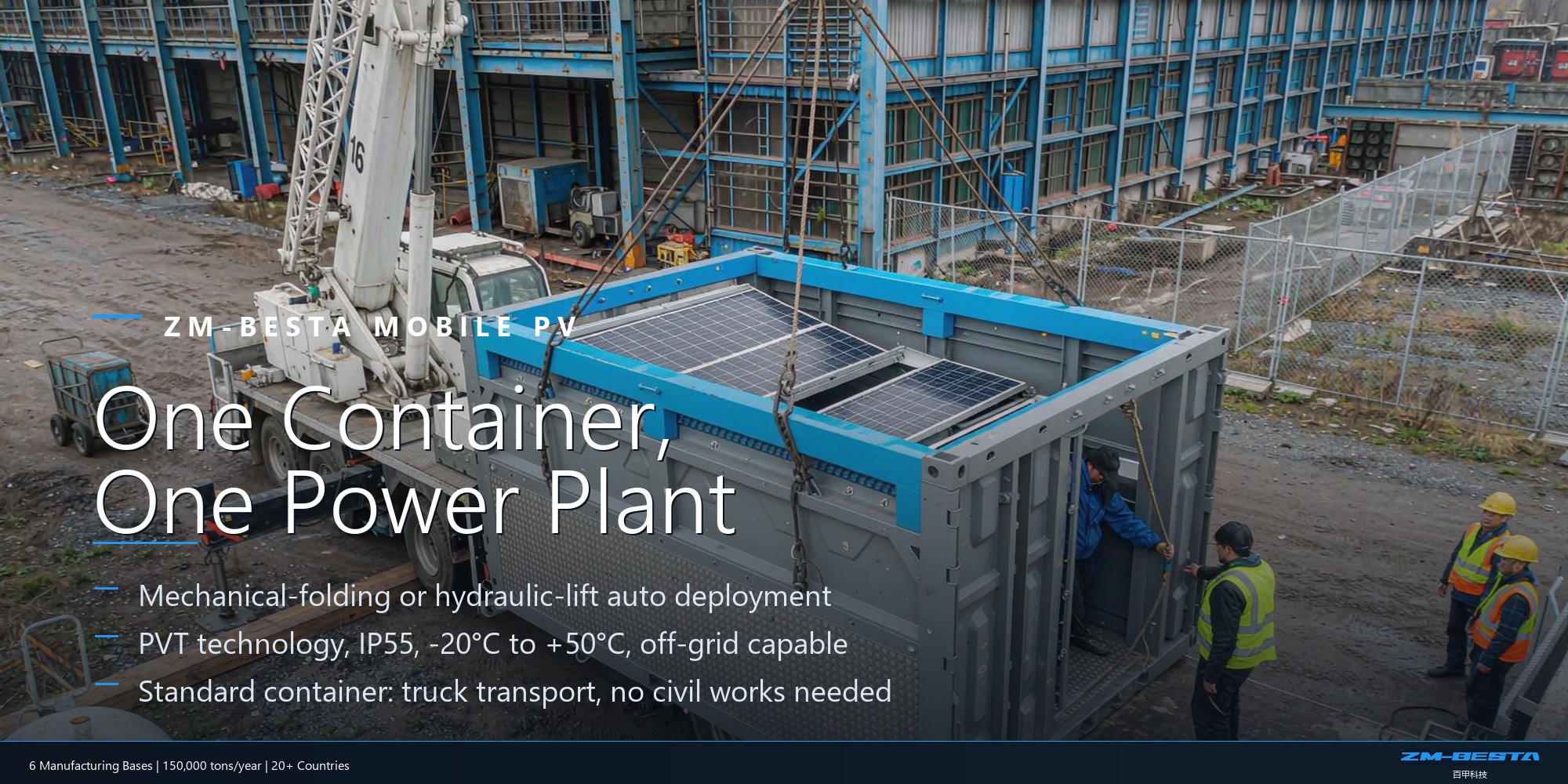
A mobile solar power station is not “solar panels mounted on a truck”. It integrates PV modules, storage batteries, inverters and the power distribution system into a single standard container, forming a containerized solar power system.
One Container Is a Complete Power Station
Xuzhou Zm-Besta’s mobile solar power stations are manufactured and delivered by its subsidiary Jiangsu Zm-Besta New Energy Technology Co., Ltd., and are available in two selectable models:
- Mechanical folding type:PV panels fold and stow along tracks inside the container and deploy automatically on arrival
- Hydraulic lifting type:The hydraulic system automatically raises and deploys the panels
Both models integrate PVT (photovoltaic-thermal) technology, feature an IP55 protection rating, operate from -20°C to 50°C, support off-grid operation, and the related technologies are patent-pending.
For temporary scenarios, we recommend the following standard configuration baselines:
- Temporary office/command center/medical point: 50 kW + 100 kWh storage, generating 180-250 kWhper day
- Communication base station + lighting: 10-30 kW
- Multiple units in parallel: Expandable to over 100 kW
Mobile Solar vs. Diesel Generators
Diesel wins on the sticker price; solar wins on operating costs.
| Comparison item |
Mobile solar power station |
Diesel generator |
| Energy cost |
Free sunlight |
Fuel price + transport, about $0.20-0.30/kWh |
| Noise |
< 65 dB, can run at night |
75-100+ dB, often complained about |
| Operating emissions |
Zero emissions |
About 0.7-1 kg CO₂ per kWh |
| Maintenance |
Low, about 80% less than diesel generators |
Frequent, requires dedicated staff on site |
| Fuel supply |
Not required |
Continuous dependence; a hard weakness in remote areas |
| Equipment lifespan |
20-25 years |
5-10 years |
| On-site deployment |
80-160 minutes to deploy and connect |
Ready to use on arrival, but high follow-up costs |
On Site in 48 Hours: It Is About Pre-Installation, Not Luck
The real value of a mobile solar power station is not “being able to generate power”, but “how fast it can generate power” during emergency power deployment. Time is progress, and progress is money.
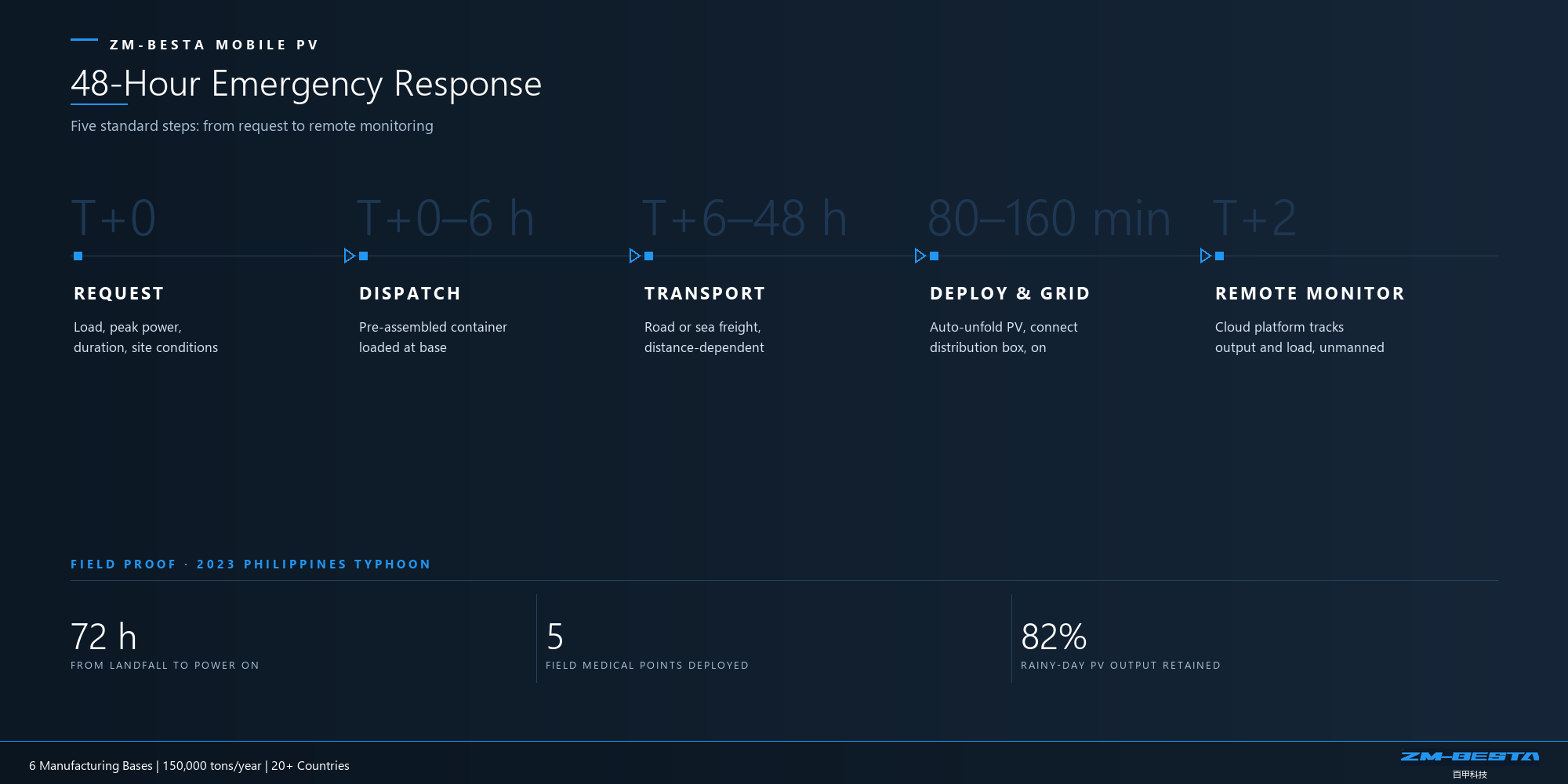
Five-Step Emergency Response Process
Xuzhou Zm-Besta’s standard response to emergency power needs:
T+0 Requirement confirmation: Confirm the load, peak power, supply duration and site conditions.
T+0~6h Equipment dispatch: Dispatch the pre-installed containerized mobile solar power station from the base and load it for transport.
T+6~48h Transport to site: Shipped by land or sea; the exact time depends on the distance.
On arrival, 80-160 minutes to deploy and connect: The solar panels deploy automatically and, once the distribution box is connected, power is supplied.
T+2 Remote monitoring: Connect to the cloud platform to view generation output and load, with no dedicated staff required.
The Pre-Installation Strategy: Why It Can Be So Fast
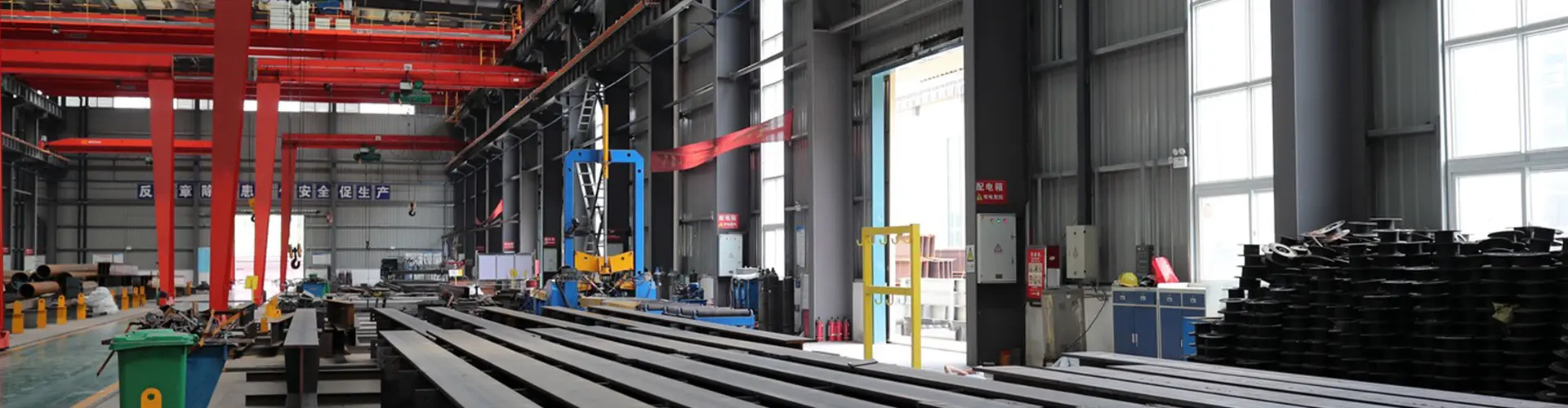
- Factory pre-installation: PV panels, storage, inverters and power distribution are integrated and tested at the factory, so no civil works or cabling are needed on site.
- Integrated transport: Standard container dimensions, so it can be shipped by an ordinary truck.
- Plug and play on arrival: It starts generating as soon as it is deployed, 3-4 times faster than traditional fixed PV.
Real-World Case: 5 Temporary Medical Points After a Typhoon
During the 2023 typhoon in the Philippines, the power grid collapsed across a large area. For this off-grid construction site power scenario, Xuzhou Zm-Besta deployed folding PV containerized power stations, setting up 5 temporary medical points within 72 hours, powering 200 medical devices at the same time, and generation efficiency still held at 82% in rainy conditions.
The truth about emergency power: it is not about “whether there is power”, but “whether the power can show up at the time you need it”.
Frequently Asked Questions
Q1: Can a mobile solar power station supply power at night and on cloudy days?
Yes. The system is equipped with storage batteries that store power during the day and discharge at night and on cloudy days. Taking the 50 kW + 100 kWh configuration as an example, it generates 180-250 kWh per day, enough to keep offices and medical points running day and night. For several consecutive rainy days, storage capacity needs to be assessed, or a solar-plus-diesel hybrid configuration can be chosen.
Q2: Can a mobile solar power station completely replace a diesel generator?
It depends on the scenario. For projects that need power for more than 2-3 weeks, have difficult fuel resupply, or face noise and emission restrictions, solar is clearly the better choice. For scenarios that only need power for a weekend, have no noise restrictions and are on a tight budget, a diesel generator is more practical. A hybrid solution with solar as the primary source and diesel as backup offers the best overall cost.
Q3: How is on-site delivery within 48 hours guaranteed?
It comes down to three things: the equipment is pre-installed at the factory, standard containers can be dispatched at any time, and no civil works are needed on site. Dispatch and loading take a few hours; the remaining time is determined by the transport distance, and urgent projects can use expedited shipping.
Q4: Is 50 kW enough?
It depends on the load. The 50 kW + 100 kWh configuration suits temporary offices, command centers and medical points; 10-30 kW is enough for a communication base station plus lighting; a site with large construction machinery needs a peak-power assessment, and multiple units can be paralleled to expand beyond 100 kW.
Q5: Does a mobile solar power station need on-site installation workers?
Basically not. On arrival, it deploys automatically by mechanical or hydraulic means, and once the distribution box is connected, power is supplied. It takes 80-160 minutes, and on-site staff can assist or be guided remotely.
Q6: What about the lifespan and initial investment of a mobile solar power station?
PV modules last 20-25 years, and the storage battery is designed for 6,000 cycles – far exceeding the 5-10 year lifespan of a diesel generator. The upfront purchase price of solar is higher, but the real cost of a diesel generator lies in operation. The equipment can be reused across projects, greatly reducing the cost allocated to each project.
Summary
The bill for temporary power must not be judged by the rental fee alone.
A diesel generator is cheap at the starting price, but fuel, maintenance, noise and emissions each come back to bill you later. A mobile solar power station packs PV, storage and power distribution into one standard container – pre-installed at the factory, deployed on arrival and monitored remotely – turning “temporary power supply” from something you worry about into something you never have to think about.
Supply cycle longer than two weeks, difficult fuel resupply, or noise and emission restrictions – if any two of these three conditions apply, you should seriously consider a mobile solar power station.
Want to evaluate whether your project is a good fit? Leave a message or send an email to get the solution and configuration sheet: info@xzbesta.com