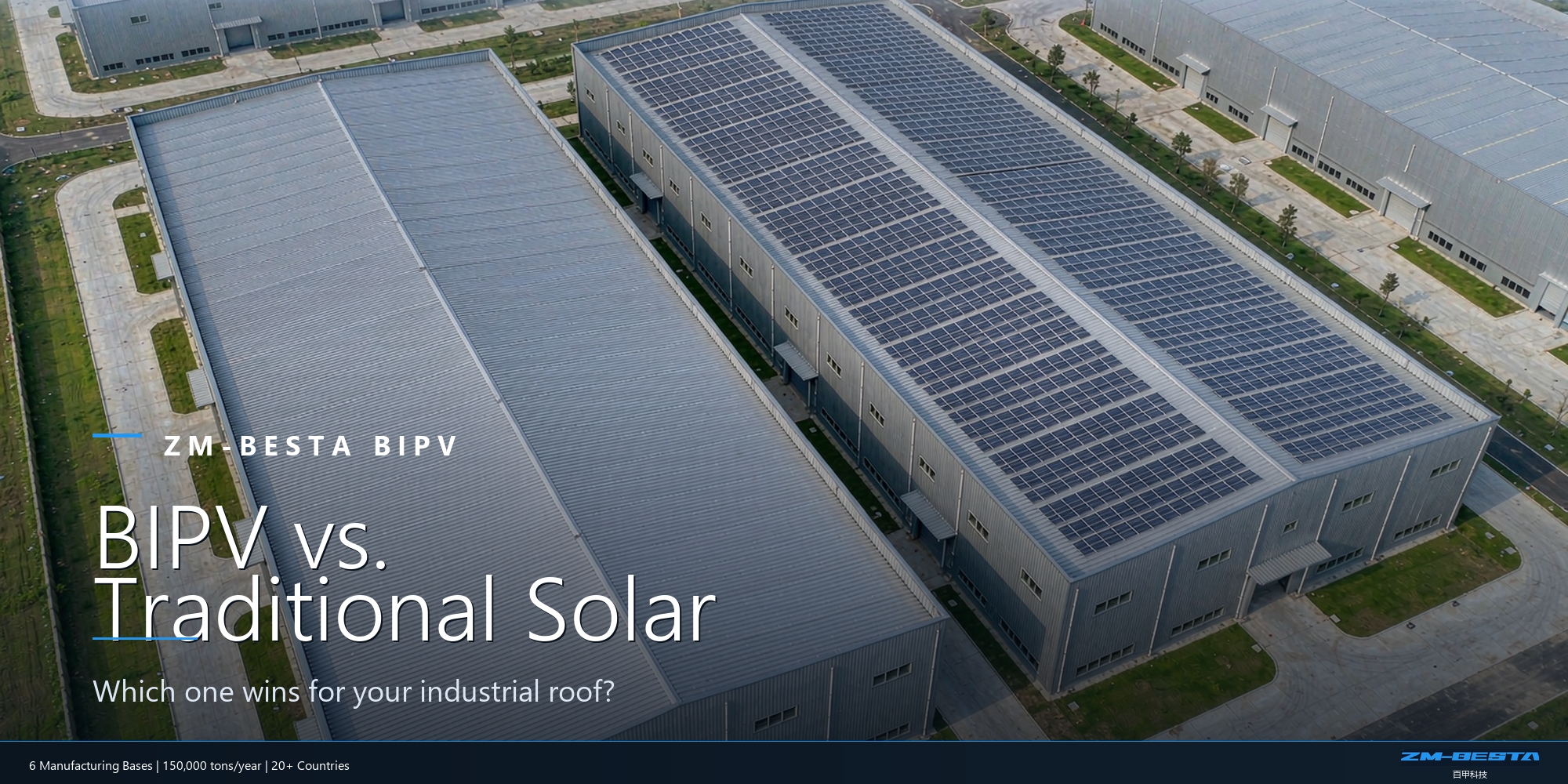
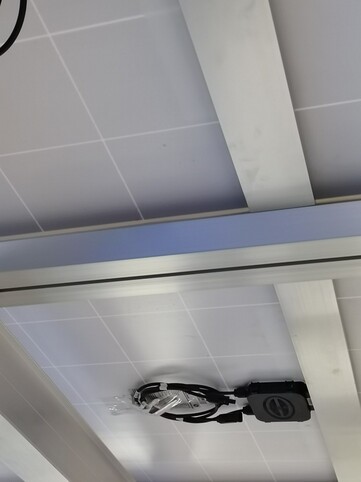
In a construction project, the building owner asks you: Should the rooftop solar system use BIPV or traditional solar panels?
Most people’s first reaction: traditional panels are cheaper, BIPV is expensive.
Judging by procurement price alone, this assessment is correct.
But building-integrated photovoltaics is not a consumer product — it operates for more than 25 years.
Looking only at unit price without considering life-cycle cost is doing the owner a disservice.
What Is the Relationship Between BIPV and BAPV?
BIPV = Building Material + Power Generator
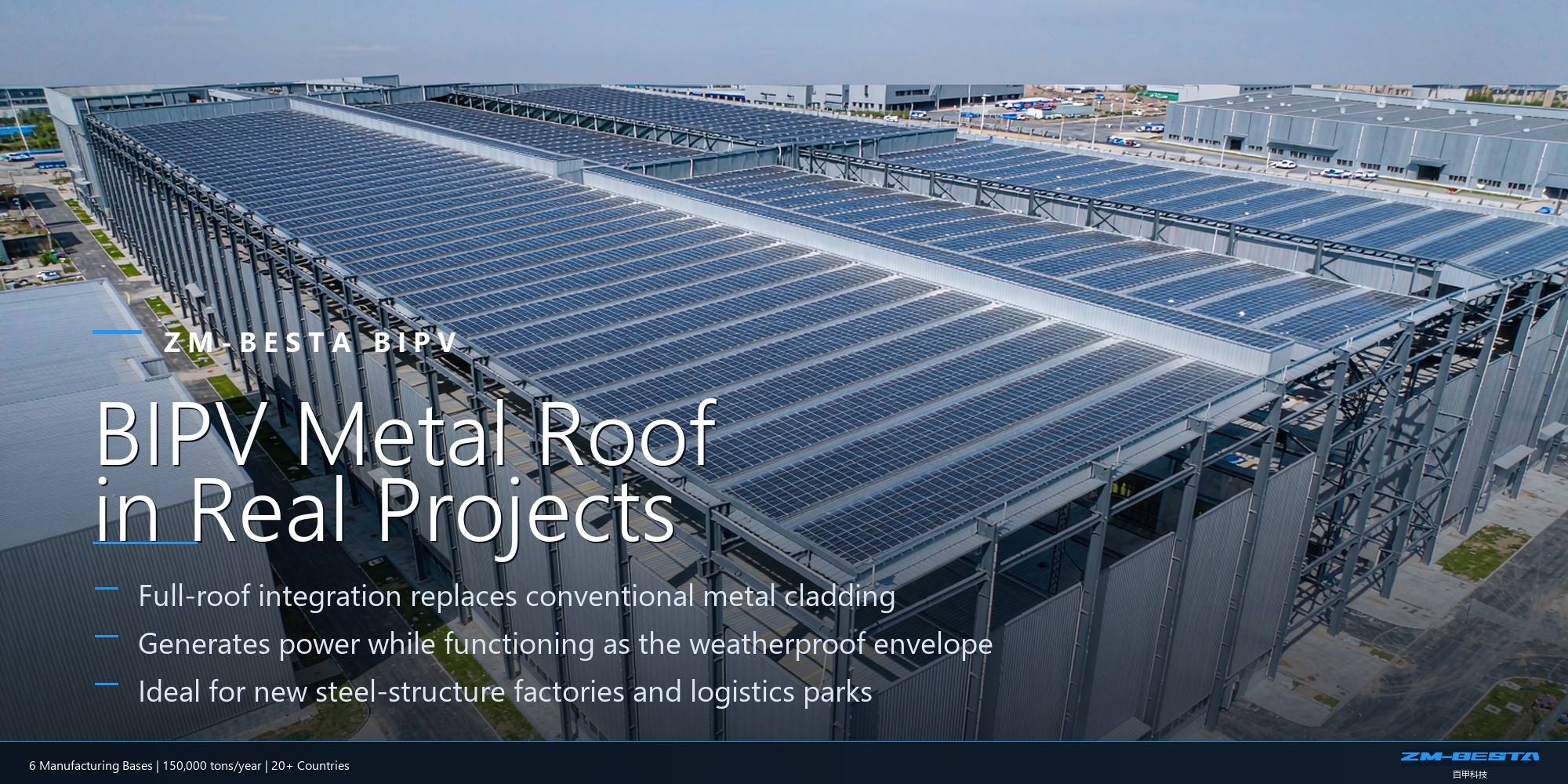
BIPV (Building-Integrated Photovoltaics) is not “solar panels installed on a building” but “photovoltaics that replace building materials.” A solar tile is both a roof structure and a power-generation unit. It must simultaneously meet building material standards (waterproof, fire-resistant, wind-pressure-resistant) and photovoltaic standards (IEC 61215, IEC 61730).
BAPV = “Bolt-on Equipment” on the Rooftop
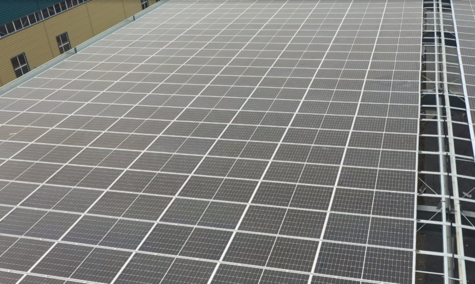
BAPV (Building-Applied Photovoltaics) is traditional rooftop solar. Mounting brackets are fixed to the roof, modules are placed on the brackets, and the building and photovoltaics are two independent systems. Installation is fast and cost is low, but the roofing material still needs to be purchased separately.
Four-Dimensional Comparison: Installation Method / Efficiency / Lifespan / Payback Period
Installation Method — Integrated vs. Bolt-on
BIPV must be involved at the architectural design stage. In factories, it replaces metal roof panels, facades, carport canopies, and skylights — these are determined at the construction drawing stage. Installation requires multi-discipline coordination, with higher complexity, but it is completed in one step.
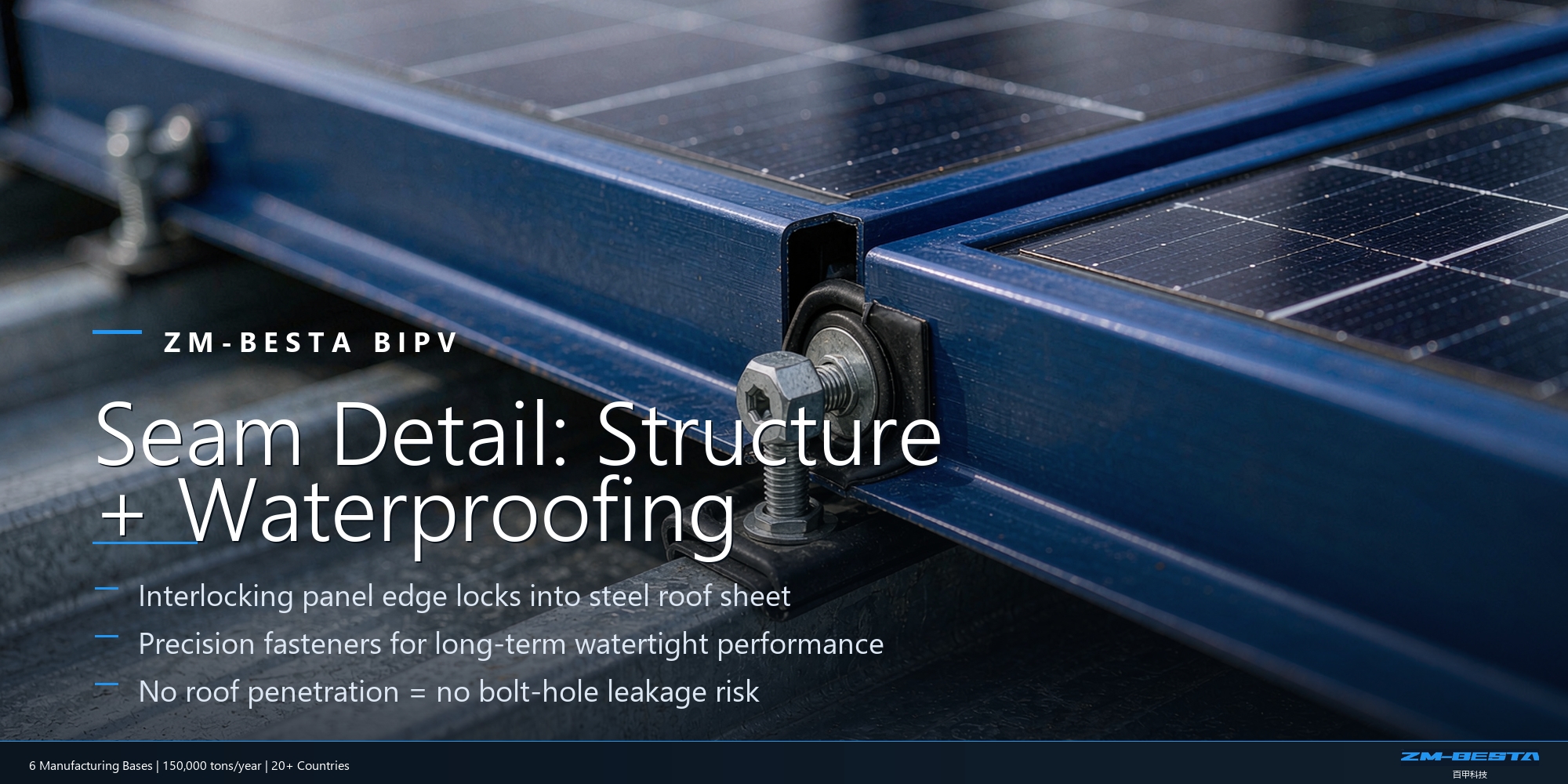
BAPV follows a “retrofit” logic. The building is completed first, then brackets are installed on the roof. A waterproof roof surface is built first, then solar panels are installed. It is simpler, but the bracket anchor points are always the weak link in waterproofing.
Key difference: BIPV eliminates the procurement and installation cost of the replaced building materials. BAPV does not save this cost — instead, it adds a set of mounting brackets.
Power Generation Efficiency — Structural Advantages Compensate for Efficiency
Single-panel efficiency comparison:
- BIPV crystalline silicon modules (preferred for factory roofs) >= 22.5%
- Traditional monocrystalline modules (BAPV): 20-24%
In single-panel efficiency, BIPV is slightly lower than BAPV, but the gap is minimal.
However, BIPV roofing replaces traditional color steel tiles + waterproofing layer + insulation layer, reducing roof load by 15-20% and cutting steel structure consumption by 12.5-14.3%. The electricity generated by solar carports can directly power charging stations and park lighting.
Conclusion: BAPV wins on single-panel efficiency; BIPV wins on structural synergy design.
Service Life — Building-Grade vs. Equipment-Grade
- BIPV: 25-30 years, with some products designed to match the building lifecycle (30-50 years).
- BAPV: 20-25 years warranty, actually usable for 25-30 years, but the inverter needs replacement midway.
BIPV is embedded in the building structure, with high waterproof, windproof, and fire-resistant performance. Traditional roof panels are exposed to wind and snow, and bracket bolt points require periodic waterproofing inspections.
Key difference: BIPV is part of the building — its lifespan follows the building. BAPV is equipment — its lifespan follows the equipment.
Investment Payback Period — Who Pays Back Faster?
| Comparison Item | BIPV | BAPV |
| Initial Investment (Commercial Projects) | $3,000-5,000/kW | $1,000-2,500/kW |
| Net Premium After Deducting Replaced Materials | 5-15% | — |
| Commercial Project Payback Period | 8-12 years | 5-8 years |
| Payback Period (After Subsidies) | 6-9 years | 4-6 years |
| 30-Year IRR | 12-21.6% | 8-12% |
| 25-Year NPV (Including All Returns) | 30-50% higher | Baseline |
Looking at payback period alone, BAPV is 2-4 years faster.
But this comparison has a trap: BIPV eliminates the procurement and installation cost of replaced building materials — money that would be spent anyway in the traditional approach. If the owner is already planning to build a new factory, renovate the roof, or build a carport, BIPV’s “net incremental cost” is far lower than the apparent price.
In one sentence: On payback period alone, BAPV wins. On total life-cycle returns, BIPV wins.
How to Choose Between BIPV and BAPV?
When to choose BIPV?
- New construction or large-scale renovation
- Need a solar carport simultaneously — canopy material directly replaced with PV panels
- Project requires green building certification (LEED/BREEAM)
- Owner focuses on 30-year total returns rather than short-term payback
When to choose BAPV?
- Retrofitting existing building roofs in good condition
- Budget-sensitive, pursuing fastest payback
- Sufficient roof area with unobstructed orientation
FAQ
Q1: Is BIPV efficiency much lower than traditional solar?
A: The single-panel efficiency gap is minimal. However, BIPV can replace traditional color steel tiles + waterproofing layer + insulation layer, and the steel consumption for factory buildings is often lower than a pure roofing solution.
Q2: Is BIPV suitable for existing building retrofits?
A: Yes, but with limitations. Facade retrofits require structural load-bearing assessment — BIPV is 15-20 kg/m2 heavier than conventional curtain walls. Roof retrofits require complete roof renovation. If the goal is simply to add solar panels, BAPV is more appropriate.
Q3: Is BIPV’s waterproofing performance reliable?
A: BIPV itself is a building envelope material that uses structural waterproofing. Compared to the waterproofing risks from BAPV bracket penetrations, BIPV’s waterproofing logic is more reliable.
Q4: Are steel-structure buildings suitable for BIPV?
A: Very suitable. Steel-structure buildings have metal panel roofs and walls, naturally suited for photovoltaic integration. BIPV metal roof panels can directly replace traditional profiled steel sheets while generating power. For industrial plants, warehousing and logistics, and other steel-structure projects, BIPV is a highly efficient solution for cost reduction and performance enhancement.
Selection Summary
BIPV and traditional solar are not substitutes — they are different tools for different scenarios. BAPV fits the “bolt-on” logic; BIPV fits the “integration” logic. For new construction or renovation projects where owners care about 30-year total returns, BIPV’s cost-effectiveness is severely underestimated.
Want to know how BIPV integrates with steel-structure buildings? Leave a comment to get a solution.
Email: info@xzbesta.com