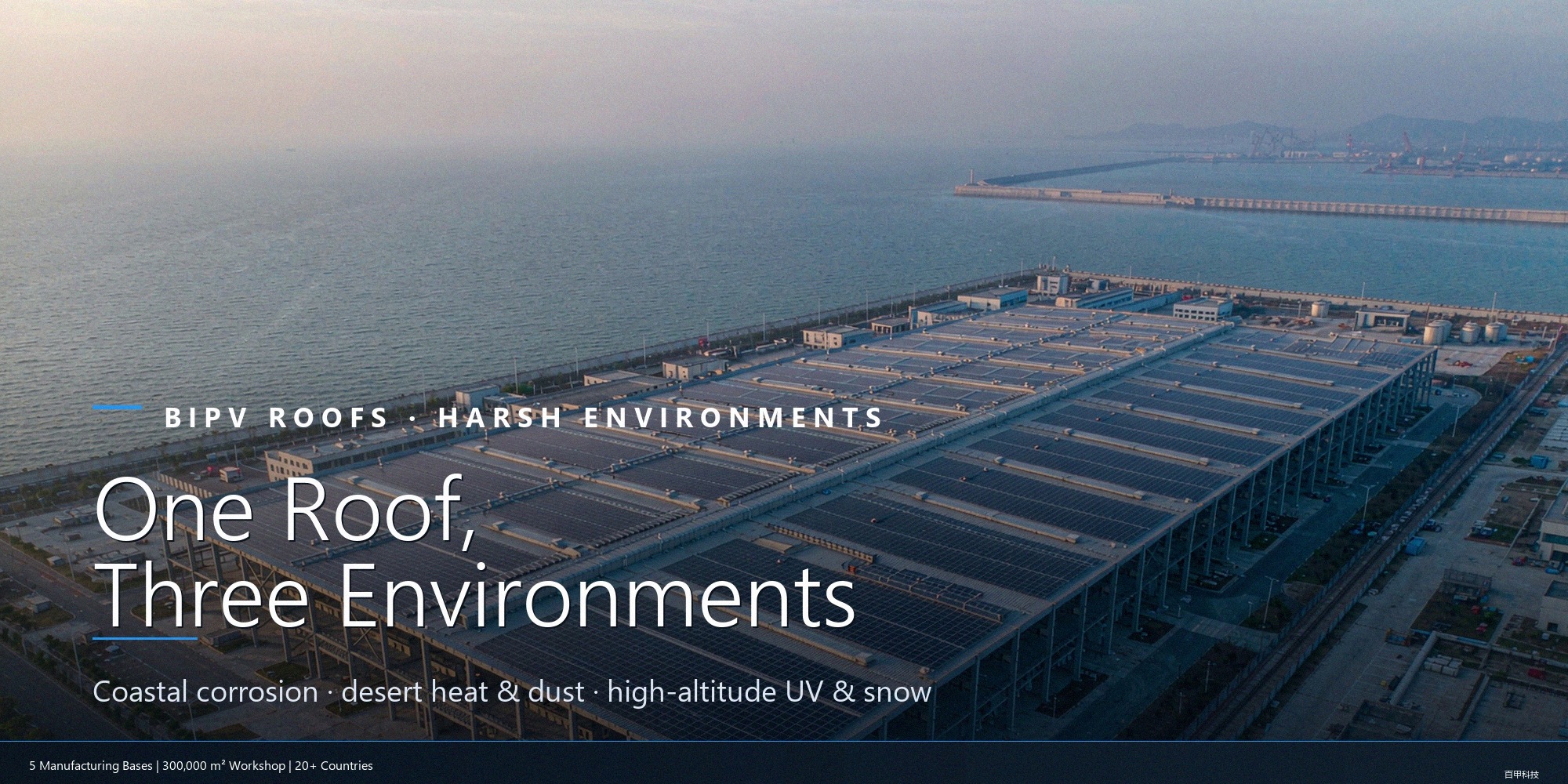
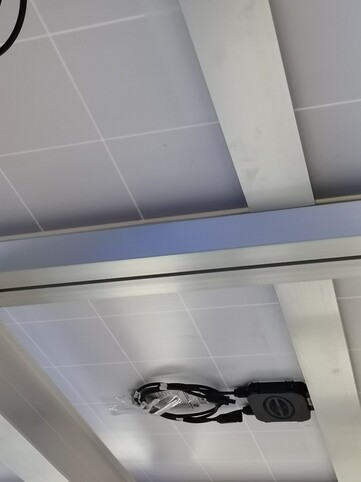
The same BIPV roofing system can fail in three completely different ways when installed in three different locations.
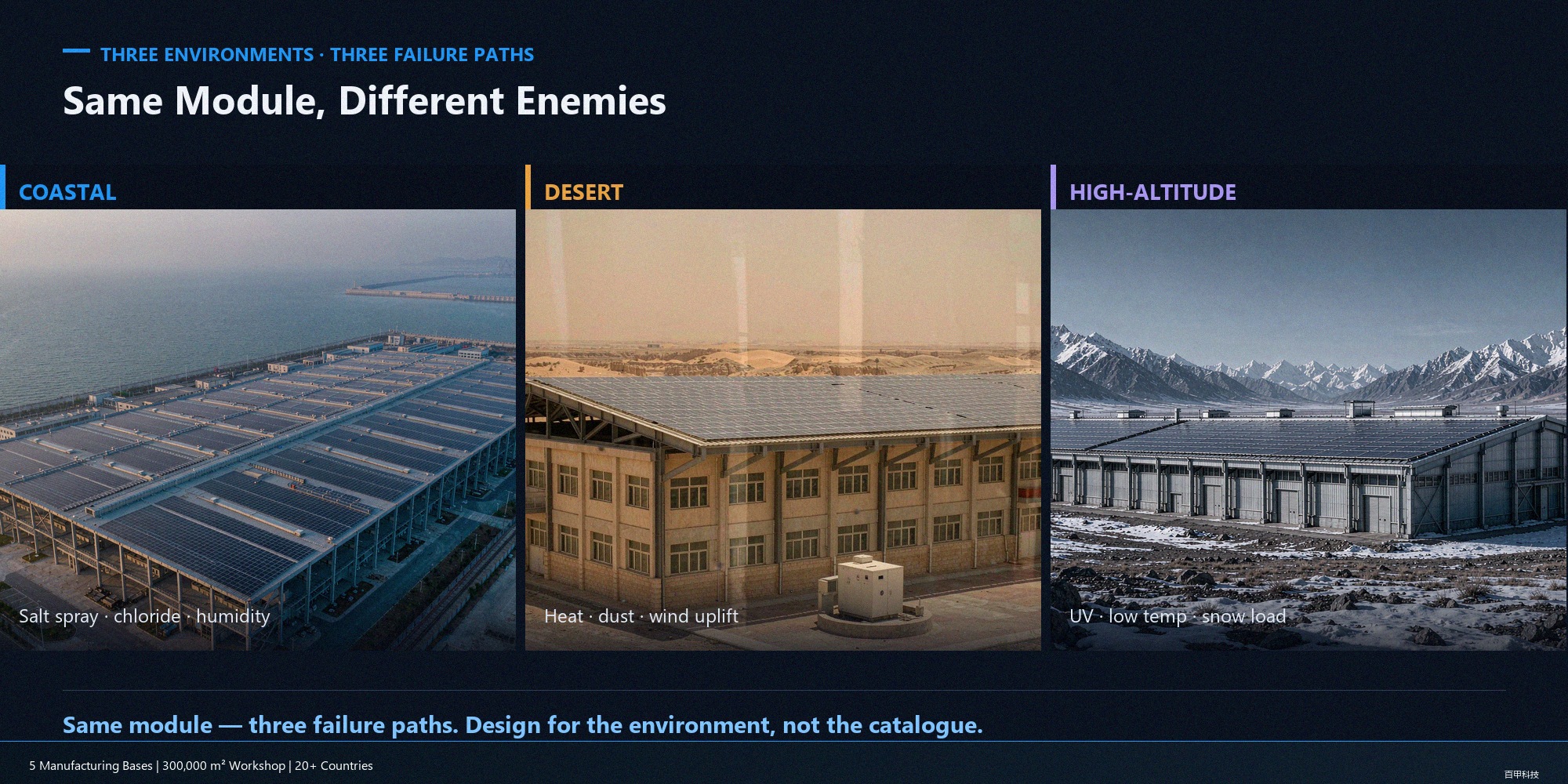
At coastal sites, corrosion is the primary risk. In deserts, high temperatures and dust take their toll. At high altitudes, intense UV radiation and snow loads become major concerns. These environments place different—and sometimes conflicting—demands on the structure, building envelope, and PV modules.
Many projects still use the same conventional roofing design regardless of location. That approach may work well in a mild inland climate, but in harsh environments it can leave several vulnerabilities unaddressed. This article examines the key environmental stresses, failure mechanisms, and minimum design considerations for each setting.
Why Harsh Environments Are a Real Stress Test for BIPV
Three Environments, Three Failure Pathways
The key difference between BIPV and conventional roofing is that the PV modules themselves form part of the building envelope. This means they must perform three functions simultaneously: power generation, waterproofing, and load-bearing. Failure in any one of these areas can compromise the other two.
Corrosion first attacks fasteners and connection plates, followed by module frames and junction boxes. High temperatures reduce power generation efficiency while accelerating the aging of encapsulation materials. UV radiation degrades the backsheet and encapsulant first, potentially leading to insulation failure over time.
The common pattern across all three failure pathways is that failure rarely occurs suddenly. Instead, damage accumulates gradually during the first five years, with problems becoming more apparent between years five and eight.
Why Conventional Roofing Practices Are Not Enough
The primary objectives of conventional roofing design are waterproofing and structural load-bearing capacity. Corrosion protection and material aging are often assessed based on the assumption of a “general industrial environment.”
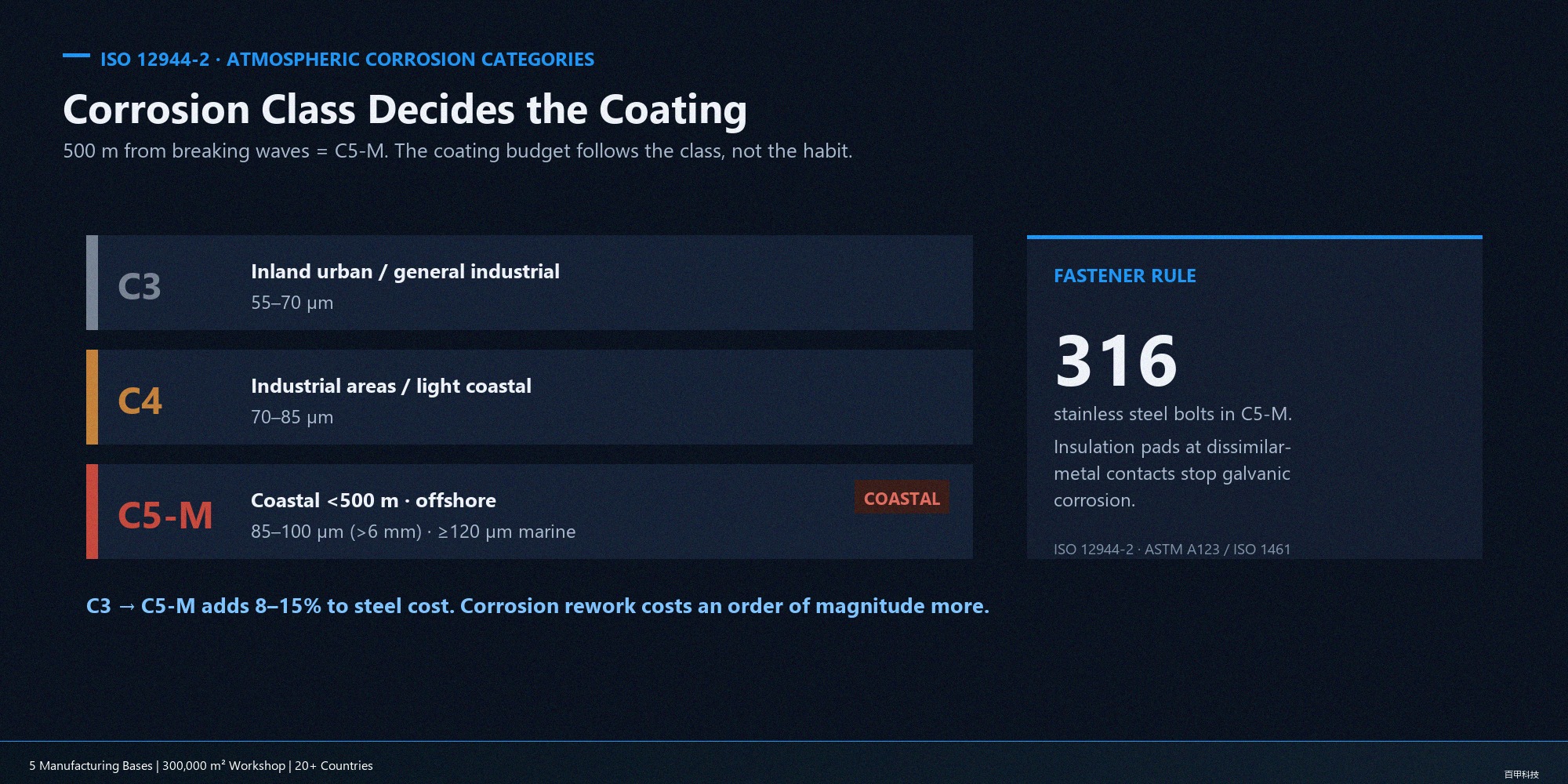
Harsh environments require a different approach. Take coastal areas as an example: for the same steel component, C3 or C4 corrosion protection may be sufficient for an inland project, while a project within 500 meters of the coastline may require C5-M protection, depending on actual exposure conditions and applicable standards. The required coating thickness can differ by more than twofold, leading to a significant cost difference.
| Environment | Primary Stress Factors | Typical Failure Modes | Key Design Considerations |
| Coastal | Salt spray, chloride ions, high humidity | Fastener corrosion, connection plate corrosion, white corrosion spots on module frames | Corrosion protection category, coating thickness, isolation of dissimilar metals |
| Desert | High temperatures, sand and dust, strong winds, large temperature fluctuations | Power output degradation, dust accumulation on glass, wind uplift damage | Temperature coefficient, wind uplift-resistant detailing, cleaning access |
| High altitude | Intense UV radiation, low temperatures, snow loads, large day–night temperature fluctuations | Backsheet cracking, encapsulant yellowing, snow-load damage | Material weather resistance, snow-load calculations, drainage pathways |
Coastal Projects: Corrosion Is the Top Priority
What Does ISO 12944 C5-M Mean?
According to the atmospheric corrosivity classification in ISO 12944-2, coastal sites located within 500 meters of breaking waves may fall into the C5-M category, indicating very high corrosivity, depending on the actual environmental conditions.
This is not simply a matter of applying slightly stricter protection. In C5-M environments, the annual corrosion rate of carbon steel can be five to ten times higher than in C3 environments. Steel components without adequate protection may develop significant rusting and cross-sectional loss within three to five years.
Minimum Requirements for Coating and Fastener Selection
In C5-M environments, hot-dip galvanizing requires substantially greater coating thickness:
| Corrosion Category | Typical Environment | Steel Coating Thickness Requirements | Recommended Protection System |
| C3 | Inland cities; general industrial environments | 55–70 μm | Hot-dip galvanizing, or primer + topcoat |
| C4 | Industrial areas, mildly corrosive coastal environments | 70–85 μm | Hot-dip galvanizing + epoxy intermediate coat + polyurethane topcoat |
| C5-M | Within 500 m of the coastline, offshore environments | 85–100 μm (for components thicker than 6 mm); ≥120 μm for marine engineering components | Hot-dip galvanizing + duplex coating system, with a total dry film thickness of ≥300 μm |
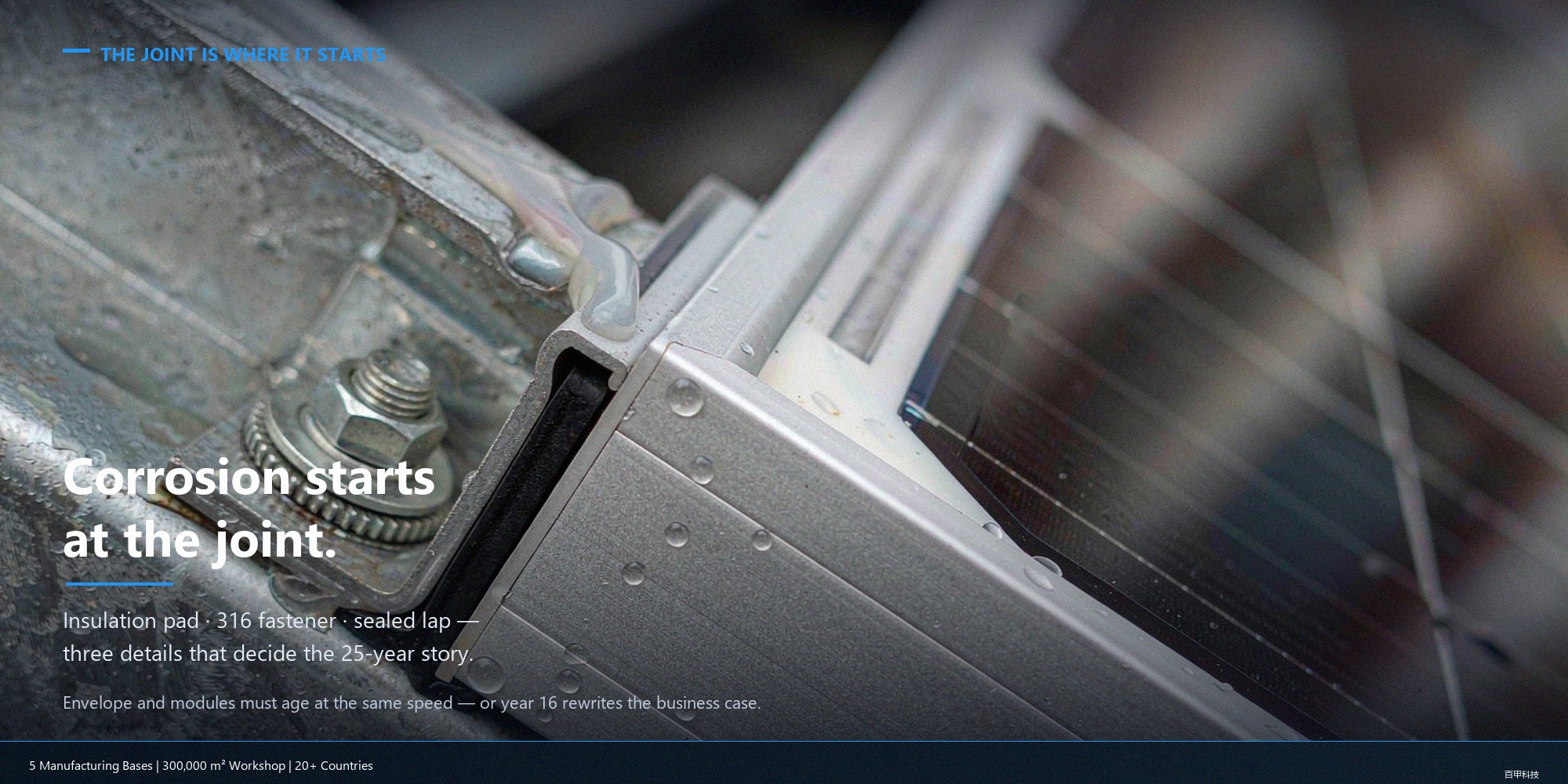
Fasteners are another detail that is often overlooked. In C5-M environments, ordinary zinc-plated bolts may develop rust spots within two to three years. 316 stainless steel fasteners are worth considering, or insulating washers can be installed at dissimilar-metal contact points to help prevent galvanic corrosion.
PV modules also have specific requirements. Inadequate anodizing of aluminum frames or insufficient junction-box sealing can lead to white corrosion deposits or water ingress within two to three years.
Desert Projects: The Double Challenge of High Temperatures and Dust
Module Temperature and Power Loss
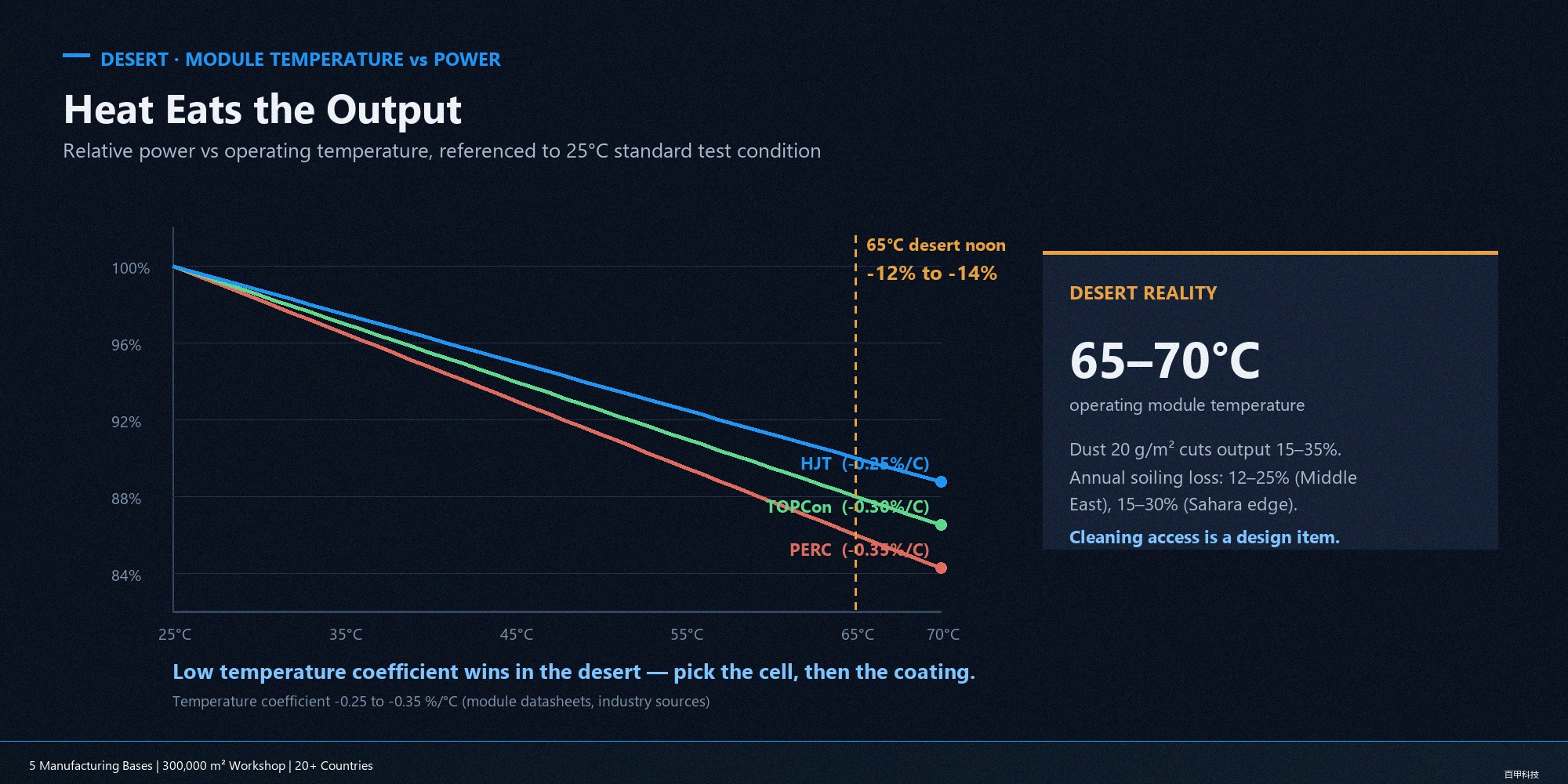
In desert environments, PV module operating temperatures can reach 65–70°C. Crystalline silicon modules have a negative power temperature coefficient, typically ranging from −0.25% to −0.35%/°C for mainstream products.
Using a temperature coefficient of −0.3%/°C, the relative power output decreases by approximately 12% as the module temperature rises from the 25°C standard test condition (STC) to 65°C. At 70°C, the reduction approaches 14%.
| Module temperature | Relative Rated Power (at −0.3%/°C) | Description |
| 25°C | 100% | Standard Test Conditions (STC) |
| 45°C | 94% | Sunny summer conditions in temperate climates |
| 55°C | 91% | Typical summer conditions in Central Asia and the Middle East |
| 65°C | 88% | Intense midday solar irradiance in desert environments |
| 70°C | 86.5% | Extreme operating conditions |
When selecting modules, N-type TOPCon and HJT technologies generally offer lower temperature coefficients than conventional PERC modules, potentially providing an advantage in actual energy yield under desert conditions.
Soiling, Sandstorms, and Wind Uplift
The second challenge in desert environments is dust accumulation. When soiling density reaches 20 g/m², module efficiency can decrease by 15–35%. Annual soiling losses in the Middle East can range from 12% to 25%, while areas along the Sahara’s fringes may experience losses of 15–30%.
This means cleaning is not optional; it is a recurring operating expense. Cleaning access routes, maintenance walkways, water supply points, or dry-brushing systems should all be incorporated into the design from the outset.
Wind uplift is the third challenge. Transient wind pressures associated with sandstorms can be more severe than those encountered under typical wind conditions. Fastener spacing, standing-seam details, and the wind-uplift resistance of module clamps must all be recalculated based on local wind loads.
High-Altitude Projects: UV Radiation, Low Temperatures, and Snow Loads
UV Intensity and Material Aging
For every 1,000-meter increase in altitude, atmospheric filtering of UV radiation decreases, resulting in an approximate 10–12% increase in UV irradiance.
The main impacts on PV modules affect non-silicon materials, including backsheets, encapsulant films, junction-box plastics, and cable insulation.
For high-altitude projects, backsheets with higher weather-resistance ratings are recommended. POE or TPO encapsulants may be preferred over conventional EVA, depending on the module design and environmental requirements. Under intense UV exposure, EVA can be more susceptible to yellowing and acid formation.
Low Temperatures Are an Advantage; Snow Loads Are a Risk
Low temperatures can benefit power generation. Because PV modules have a negative temperature coefficient, lower operating temperatures can result in power output above the rated level. On sunny days at high altitudes, module output may exceed rated power by more than 10%.
The greater risk is snow loading. Snow loads in high-altitude regions are often underestimated, particularly in accumulation zones near parapets, gutters, and changes in roof elevation. Localized snow loads may reach twice the average value.
Snow-load design values for both the building envelope and supporting structure must be recalculated using local meteorological data rather than adopting standard values from low-altitude projects.
Three Key Design Principles
Specify Corrosion Protection Based on the Most Severe Exposure
If a project is exposed to both coastal conditions and industrial pollution, the design should follow the more stringent applicable corrosion-protection requirements. Do not compromise by averaging the two exposure levels.
The relationship between cost and risk is clear: upgrading the corrosion-protection category generally involves a manageable additional cost, while rework and production downtime caused by corrosion failure can result in losses many times greater.
Match the Service Life of the Building Envelope to That of the PV Modules
BIPV roofing systems are typically designed for a service life of around 25 years, and PV module warranties commonly extend to 25 years.
If the building envelope has an actual service life of only 15 years, the PV modules may need to be removed so the roof can be replaced in year 16, undermining the project’s overall economic model.
Roofing system selection should therefore align with the expected service life of the PV modules, rather than simply choosing the cheapest workable option.
Do Not Apply Conventional Detailing Without Adaptation
Three areas are particularly prone to problems:
- Contact between dissimilar metals:Direct contact between aluminum module frames and galvanized steel purlins can cause galvanic corrosion in humid environments. Use insulating pads or select compatible materials to reduce this risk.
- Gaps and drainage paths: Dust and salt can accumulate in gaps, creating common initiation points for corrosion. Drainage paths must be designed to prevent water from pooling.
- Fasteners and seals:The sealing washers on self-tapping screws can deteriorate rapidly under UV exposure and high temperatures, making them a frequent source of roof leakage complaints.
Frequently Asked Questions
Q1: How long can a BIPV roofing system last in a C5-M environment?
A C5-M protection system designed in accordance with applicable standards (hot-dip galvanizing + duplex coating, with a total dry film thickness of ≥300 μm) can achieve a design durability of 15–25 years (the “Very High” durability range defined in ISO 12944-5). Actual service life depends on maintenance. Coating inspections are recommended every 3–5 years.
Q2: Do PV modules for desert projects need special models?
Not necessarily, but the selection criteria differ. Prioritize modules with lower temperature coefficients (N-type TOPCon / HJT), thicker glass for better resistance to windblown sand, encapsulants suitable for harsh environments rather than conventional EVA, and dedicated cleaning access routes.
Q3: Can low temperatures cause PV modules to crack at high altitudes?
Generally, no. PV module glass can actually have higher mechanical strength at low temperatures. The real risks are snow loads and refreezing after snowmelt, which can cause ice blockages at drainage outlets.
Q4: How much more do projects in harsh environments cost than conventional projects?
Upgrading corrosion protection from C3 to C5-M may increase steelwork costs by approximately 8%–15%, depending on component surface area and the coating system. Including upgraded fasteners and differences in module selection, the overall project cost typically increases by around 10%–20%. These figures are indicative and should be verified against actual project conditions and quotations.
Q5: Can we start with a conventional design and make changes if problems arise?
This is not recommended. In BIPV systems, PV modules form part of the building envelope, and replacing them can cost almost as much as rebuilding the roof. Corrosion and material aging develop gradually and may remain invisible during the first five years. By the time problems become apparent, structural integrity and waterproofing may already be affected.
Need a roofing solution tailored to your project’s environmental conditions? Email:info@xzbesta.com